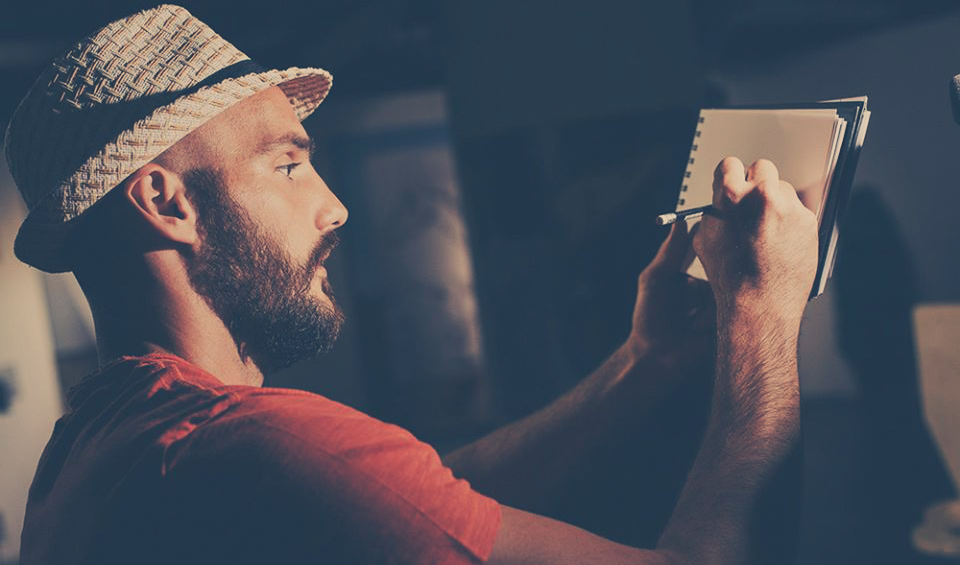
Ben Heine interviewed
by PixelSteam (*)
.

.
.
.
Where do you live?
In Brussels, Belgium.
How did you get started as an artist?
There is no specific date or event. This is just a way of living, hard work, motivation and a strong determination. I still don’t know who I am.
Who are your mentors?
The 2 main persons who always give me useful pieces of advice and who may have a direct influence on my artistic work are my father and my commercial agent.
How do you get inspired?
Everything around me is a source of inspiration.
What has been your favorite project or subject?
There are 2 favorites so far: My portraits of Michael Jackson and My « Pencil Vs Camera » series (ongoing).
Where do you want to be in 5 years as an artist? What dreams and goals do you have for the future?
I’d like to leave Belgium and go to the USA or to the South of France... still don’t know. I really want to create new forms of visual expression, and hopefully new artistic styles as well. I have a big dream for the future: I hope the world will be a better place when I’m dead.
Do you see any style that has intrinsically affected by where you live?
I've been deeply influenced by German Expressionism, Belgian Surrealism, American Pop Art and Social Realism.
How has the Internet changed your business and career?
In my opinion, the Internet is just a useful tool to get known everywhere on the planet. It can also be a dangerous place if you aren’t careful.
Who is your favorite artist, and why? Living and or Dead?
I like Andy Warhol because he was and still is an icon for so many other artists. His personal life was quite interesting and he changed the way we perceive art.
Did you go to an art school or trade school to learn your skills? and where?
I studied traditional painting and sculpture only one year in an Art School in Hastings, England when I was 18. I also have a degree in Journalism (which is rather useless in my creative activities but at least it helped me developing personal opinions about the world we live in)... So I’m mainly a self-taught artist. And I’ve been taking photos, drawing and painting since almost 10 years.
What tools do you use to make your artwork?
All kinds of traditional and digital tools. I’ve tried many…
Please tell us about your Pencil Vs Camera project? How did it start, and where is it going?
It started quite recently. This series is nothing but the result of several years of graphic exploration and a logic consequence of my artistic evolution. But the real idea came while I was watching television and writing a letter at the same time a few weeks ago. Reading my letter before putting it in the envelope, I saw in transparency the television behind the paper. I then realize it would be great to make something similar in a single image showing 2 different actions.
I went outside and Drew « Pencil Vs Camera 1 » which is very simple and shows 2 chairs with a small table. About ¼ of the scene is represented on the paper, the other ¾ happens on the photo. So this is roughly how the project started. In my other « Pencil Vs Camera » images, I tried to introduce weird elements on the paper (such as dinosaurs, ufo’s, double pair of eyes…) to contrast with the realism of the photo.
I intend to make 30 images for this series, and then I might develop new projects. I still must give it some thoughts… I don’t know where it’s going.
I really like the technique for the Lady Gaga and Bob Marley images... Can you tell us about the process?
This is what I call “Digital Circlism” and it is another personal invention.
I would describe it as a modern artistic expression, a mix between Pop Art and Pointillism. It is made with digital tools using big and small circles only.
In my opinion, the most important thing to focus on before starting that kind of project is to understand the dynamic movement of someone's face. I usually apply each circle individually on a black background with a sharp round brush in Photoshop CS4 (it could be any other graphics creation software).
It is also essential to pay attention on the aspect of each circle (changing slightly the size and color for every circle is always better). That's the difficult part, because there can be several thousands circles in a single portrait. It has to be done with harmony, according to the main lines and dynamism of the subject represented.
I usually make bigger circles in the lighter areas of the subject and smaller circles in the darker places. This gives more volume and a 3D illusion. There is no limit, it's a new technique and I think there is much more to do with it.
Do you do any custom commission pieces?
Yes, it happens. I’m always open to start serious projects. I receive several requests every week. It’s usually difficult to make a choice.
What are your work habits like... when do you start? finish?
I start working on my artistic projects as soon as I wake up and end when I’m really tired.
What do you do for fun?
I like to spend time with my fiancée and to rest and sleep from time to time
How old are you?
26 (27 in June)
---------------
In Brussels, Belgium.
How did you get started as an artist?
There is no specific date or event. This is just a way of living, hard work, motivation and a strong determination. I still don’t know who I am.
Who are your mentors?
The 2 main persons who always give me useful pieces of advice and who may have a direct influence on my artistic work are my father and my commercial agent.
How do you get inspired?
Everything around me is a source of inspiration.
What has been your favorite project or subject?
There are 2 favorites so far: My portraits of Michael Jackson and My « Pencil Vs Camera » series (ongoing).
Where do you want to be in 5 years as an artist? What dreams and goals do you have for the future?
I’d like to leave Belgium and go to the USA or to the South of France... still don’t know. I really want to create new forms of visual expression, and hopefully new artistic styles as well. I have a big dream for the future: I hope the world will be a better place when I’m dead.
Do you see any style that has intrinsically affected by where you live?
I've been deeply influenced by German Expressionism, Belgian Surrealism, American Pop Art and Social Realism.
How has the Internet changed your business and career?
In my opinion, the Internet is just a useful tool to get known everywhere on the planet. It can also be a dangerous place if you aren’t careful.
Who is your favorite artist, and why? Living and or Dead?
I like Andy Warhol because he was and still is an icon for so many other artists. His personal life was quite interesting and he changed the way we perceive art.
Did you go to an art school or trade school to learn your skills? and where?
I studied traditional painting and sculpture only one year in an Art School in Hastings, England when I was 18. I also have a degree in Journalism (which is rather useless in my creative activities but at least it helped me developing personal opinions about the world we live in)... So I’m mainly a self-taught artist. And I’ve been taking photos, drawing and painting since almost 10 years.
What tools do you use to make your artwork?
All kinds of traditional and digital tools. I’ve tried many…
Please tell us about your Pencil Vs Camera project? How did it start, and where is it going?
It started quite recently. This series is nothing but the result of several years of graphic exploration and a logic consequence of my artistic evolution. But the real idea came while I was watching television and writing a letter at the same time a few weeks ago. Reading my letter before putting it in the envelope, I saw in transparency the television behind the paper. I then realize it would be great to make something similar in a single image showing 2 different actions.
I went outside and Drew « Pencil Vs Camera 1 » which is very simple and shows 2 chairs with a small table. About ¼ of the scene is represented on the paper, the other ¾ happens on the photo. So this is roughly how the project started. In my other « Pencil Vs Camera » images, I tried to introduce weird elements on the paper (such as dinosaurs, ufo’s, double pair of eyes…) to contrast with the realism of the photo.
I intend to make 30 images for this series, and then I might develop new projects. I still must give it some thoughts… I don’t know where it’s going.
I really like the technique for the Lady Gaga and Bob Marley images... Can you tell us about the process?
This is what I call “Digital Circlism” and it is another personal invention.
I would describe it as a modern artistic expression, a mix between Pop Art and Pointillism. It is made with digital tools using big and small circles only.
In my opinion, the most important thing to focus on before starting that kind of project is to understand the dynamic movement of someone's face. I usually apply each circle individually on a black background with a sharp round brush in Photoshop CS4 (it could be any other graphics creation software).
It is also essential to pay attention on the aspect of each circle (changing slightly the size and color for every circle is always better). That's the difficult part, because there can be several thousands circles in a single portrait. It has to be done with harmony, according to the main lines and dynamism of the subject represented.
I usually make bigger circles in the lighter areas of the subject and smaller circles in the darker places. This gives more volume and a 3D illusion. There is no limit, it's a new technique and I think there is much more to do with it.
Do you do any custom commission pieces?
Yes, it happens. I’m always open to start serious projects. I receive several requests every week. It’s usually difficult to make a choice.
What are your work habits like... when do you start? finish?
I start working on my artistic projects as soon as I wake up and end when I’m really tired.
What do you do for fun?
I like to spend time with my fiancée and to rest and sleep from time to time
How old are you?
26 (27 in June)
---------------


