Showing posts with label Activism. Show all posts
Showing posts with label Activism. Show all posts

Other Interview
With Ben Heine .
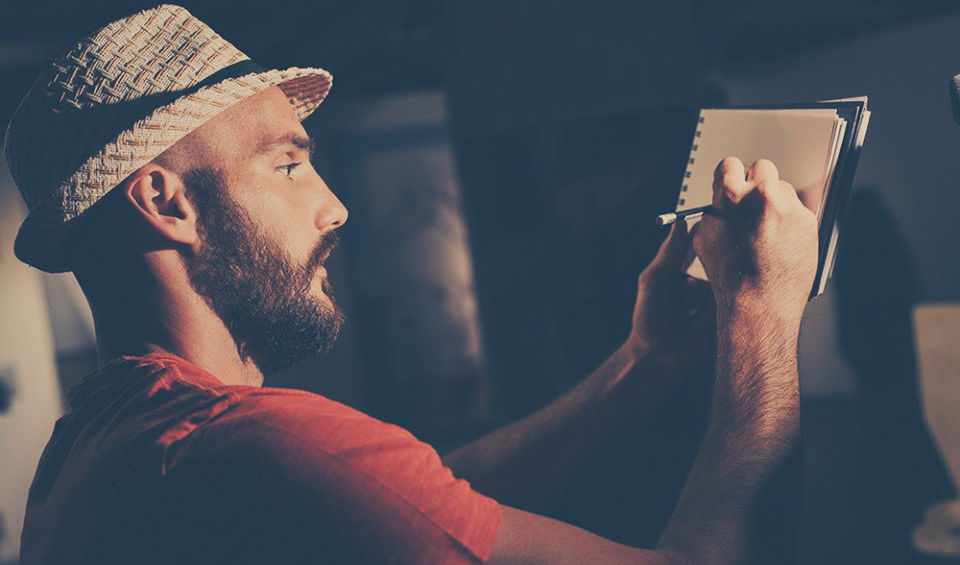
 Ben by Rohan Voigt
 Ben by Rohan Voigt
.
By Andrei Pavel (*)
.
You made it on finding your own style. Why this choice, why illustration?
Do I have a specific style? Thank you! Let’s say so. I think that “getting a style” shouldn’t be a purpose in itself. A good piece of art will be good even if it’s not officially “stylized”. Strong and recognizable styles are always useful for artists who do not sign their creations due to lack of time. People will always be sure it’s theirs! Ha ha.
Anyway, finding my own way in art was not an easy task at all, I remember my beginnings in painting, some 8 years ago, when I was about 17, many people actually disliked what I was doing. I think it had too many personal connotations and it was barely understandable for any other viewer. I’ve continued to paint, not worrying about people’s opinions.
One day, I suddenly realized it was completely useless to create art that was meaningless and that didn’t bring something to people. I tried to create images that are already somewhere in people’s minds, but that they never ever saw before. I worked on this very hard, and I came back to drawing. I really wanted my creations to have an impact on people. I tried new techniques, new materials, new tools, new textures, and new sources of inspiration.
When I was younger, I used to practice different artistic disciplines. Among other activities, I used to write poetry (in French), play guitar, drums and piano and I even used to dance. When I was about 18, a devoted teacher in art history transmitted her passion to me. Although I had been creating and drawing intensively since the age of 11, this was the moment I really knew graphic arts would be in the centre of my adult life. I could have attended her class hours and hours every day. The same person was also teacher of psychology, and I also loved attending this course. This is when I began to read in people’s minds. I got more interested in Jung’s theory on the collective subconscious and tried to search within myself for universal images and symbols.
Then I started painting. I produced about two hundred large paintings in a few months, just after my 1 year trip in Hastings, in England.
When I started my studies in Journalism at 19, I made much more realistic illustrations with political and social meanings. Illustration allows artists to use different materials and methods while creating infinite kinds of content, may they be abstract, surrealistic, political…
Political illustration was also perfectly fitting my new identity as a young journalist. Although I was prepared to write news articles, I never really considered myself as a real journalist… I find this function very important but boring somehow. I chose graphic art, because it’s what I’m the best at. I intend now to make political creations that have a universal meaning, that concern us all, as human beings (Issues like global warming...).
One of my dreams is to see the establishment of a “cartoon department” in all the faculties of journalism in Belgium, in Europe, in the World. We all should learn to express ourselves more with icons and images… It could even engender a new dimension to inter-human communication.
I’m now 25, I work in a creative Communication Agency in Belgium. I’m still sincerely willing to make political art for the weak and oppressed ones, to do my best to bring some hope and courage for those who need it the most and to make art that promotes authentic peace and democracy in a mad world.
What are the elements that make your drawings different from others?
Regarding form, I made most of my drawings (portraits and cartoons) with a black ballpoint pen on paper (with digital colours and enhancements added afterwards). This is a very easy and rewarding technique. I know it may sound paradoxical, but you can get some extraordinary textures and high contrasts with such a simple instrument. At the beginning, I always put too much ink. Now, I rather try to be more “minimalist”, with just enough information to be understandable. My lines and shapes are rather sharp and I search the highest contrast most of the time. I often mix cold and warm colours.
But as I said, I don’t try to have a specific style. I guess this is my technique and the way I express messages that make me recognizable among other artists’ work. Now, I think that my “ballpoint pen period” is over, ha ha. I’m gonna make more fully traditional illustrations and come back to painting (watercolour and acrylic).
As far as content, in my non-political creations, I often use personal metaphors with soft, sweet and tender meaning. My political production is more explosive.
You're very interested and "concerned" when coming to politics. What's the main theme and messages for people reading this to understand better what it's involving?
First of all, I’d like to say that I have no political sponsors; I don’t create for anybody’s sake. I make political illustrations for those who suffer and against the corrupted and the warmongers.
I have always been deeply shocked by any kind of injustice. In my political work, my aim is to denounce imperialism, racism, oppression, discrimination, violence, Human Rights infringements, crimes against humanity… and my final goal and ideal is to promote peace and mutual respect between people of different cultures and backgrounds. This is how I was brought to draw about the Israeli/Palestinian conflict.
I realize that I've made a few mistakes with some drawings on this particular issue, which is a terribly complex one. I sometimes find them "too offensive” or “too provocative”. I think my political creations shouldn’t hurt unnecessarily one community or another. They should make people think and act in a peaceful way.
I’m a huge partisan of wide freedom of expression, considering that responsibility must be taken for everything said, written, done or drawn.
When I publish stuff online, I often receive propositions and requests of publications from different organizations. The Internet is a fantastic tool for digital activists. Although it’s a huge machine totally out of control, it helps supporters of the oppressed people having a voice in the emptiness. Sometimes this has great effects and it always amazes me how well constructed actions from militants can generate real and positive social changes and concrete political improvements. This is what I hope will happen more and more.
I also noticed you have a big amount of Romanians in your drawings. I'm talking here about Caragiale, Eliade, Nichita Stanescu, Iorga, Titu Maiorescu and Tzara. Even Basescu twice! What got your attention on them? Because every image is completed by articles and research...
Yes, it’s true; I made several caricatures of famous Romanian people. It was for the Romanian Cartoon Association called “Caricatura”. Many international artists have participated to this permanent contest. I thought it was worth sending my portraits too.
As for the articles and research accompanying the caricatures, I did this to add useful information for the readers. I think any image is much richer and clearer when there is qualitative textual information next to it. I have read different things on these people and on the Romanian past and current political landscape. I found it very interesting!
Your work brought you prizes too. Can you tell me about them? And also about the publications?
Yes, I won a few awards, but this is not very important. I don’t make illustrations for that. Sometimes it happens, and it’s really a surprise! For examples, I recently received a Success Award for a cartoon I submitted to the "1st International Cartoon Contest - Naji Al Ali" organized by "Syriacartoon". I also received some weeks ago a Certificate of Appreciation from “BuzziNews”, an online journal reporting exclusively in cartoons…
As for the publications, my illustrations have appeared in several printed magazines and papers, such as ‘La Libre Belgique’ (Belgium), ‘European Voice’ (Belgium), ‘Rolling Stone’ (Germany), ‘Acque & Terre’ (Italia), ‘Le Monde Diplomatique’, Polish edition (Poland), ‘As-Safir’ (Lebanon), ‘Al Baath’ (Syria), ‘Europa In De Wereld’ (Holland), ‘Pulse’ (Great Britain)…
I created book covers and illustrations for renowned authors (such as James Petras, Mark Prime, Mike Palecek…). I also made CD covers, posters, and t-shirt designs.
I’m also member of numerous political associations and cartoon organizations, something I’m very proud of and which brings me a better exposure worldwide.
I’ve had the chance to exhibit my creations in Belgium, Great Britain, the United States, Canada and Palestine. I even had a virtual exhibition of my paintings in Second Life!

------------------
>>> This interview will soon appear in English and Romanian on SensoTV
(*) Andrei Pavel is a 25 year old digital creator living in Bucharest, Romania. He makes fractal art. He recently interviewed several artists. All the interviews can be seen in English and Romanian on Sensotv.ro. More information on Pavel.
>>> See another interview I had with Claudio Parentela
.
Do I have a specific style? Thank you! Let’s say so. I think that “getting a style” shouldn’t be a purpose in itself. A good piece of art will be good even if it’s not officially “stylized”. Strong and recognizable styles are always useful for artists who do not sign their creations due to lack of time. People will always be sure it’s theirs! Ha ha.
Anyway, finding my own way in art was not an easy task at all, I remember my beginnings in painting, some 8 years ago, when I was about 17, many people actually disliked what I was doing. I think it had too many personal connotations and it was barely understandable for any other viewer. I’ve continued to paint, not worrying about people’s opinions.
One day, I suddenly realized it was completely useless to create art that was meaningless and that didn’t bring something to people. I tried to create images that are already somewhere in people’s minds, but that they never ever saw before. I worked on this very hard, and I came back to drawing. I really wanted my creations to have an impact on people. I tried new techniques, new materials, new tools, new textures, and new sources of inspiration.
When I was younger, I used to practice different artistic disciplines. Among other activities, I used to write poetry (in French), play guitar, drums and piano and I even used to dance. When I was about 18, a devoted teacher in art history transmitted her passion to me. Although I had been creating and drawing intensively since the age of 11, this was the moment I really knew graphic arts would be in the centre of my adult life. I could have attended her class hours and hours every day. The same person was also teacher of psychology, and I also loved attending this course. This is when I began to read in people’s minds. I got more interested in Jung’s theory on the collective subconscious and tried to search within myself for universal images and symbols.
Then I started painting. I produced about two hundred large paintings in a few months, just after my 1 year trip in Hastings, in England.
When I started my studies in Journalism at 19, I made much more realistic illustrations with political and social meanings. Illustration allows artists to use different materials and methods while creating infinite kinds of content, may they be abstract, surrealistic, political…
Political illustration was also perfectly fitting my new identity as a young journalist. Although I was prepared to write news articles, I never really considered myself as a real journalist… I find this function very important but boring somehow. I chose graphic art, because it’s what I’m the best at. I intend now to make political creations that have a universal meaning, that concern us all, as human beings (Issues like global warming...).
One of my dreams is to see the establishment of a “cartoon department” in all the faculties of journalism in Belgium, in Europe, in the World. We all should learn to express ourselves more with icons and images… It could even engender a new dimension to inter-human communication.
I’m now 25, I work in a creative Communication Agency in Belgium. I’m still sincerely willing to make political art for the weak and oppressed ones, to do my best to bring some hope and courage for those who need it the most and to make art that promotes authentic peace and democracy in a mad world.
What are the elements that make your drawings different from others?
Regarding form, I made most of my drawings (portraits and cartoons) with a black ballpoint pen on paper (with digital colours and enhancements added afterwards). This is a very easy and rewarding technique. I know it may sound paradoxical, but you can get some extraordinary textures and high contrasts with such a simple instrument. At the beginning, I always put too much ink. Now, I rather try to be more “minimalist”, with just enough information to be understandable. My lines and shapes are rather sharp and I search the highest contrast most of the time. I often mix cold and warm colours.
But as I said, I don’t try to have a specific style. I guess this is my technique and the way I express messages that make me recognizable among other artists’ work. Now, I think that my “ballpoint pen period” is over, ha ha. I’m gonna make more fully traditional illustrations and come back to painting (watercolour and acrylic).
As far as content, in my non-political creations, I often use personal metaphors with soft, sweet and tender meaning. My political production is more explosive.
You're very interested and "concerned" when coming to politics. What's the main theme and messages for people reading this to understand better what it's involving?
First of all, I’d like to say that I have no political sponsors; I don’t create for anybody’s sake. I make political illustrations for those who suffer and against the corrupted and the warmongers.
I have always been deeply shocked by any kind of injustice. In my political work, my aim is to denounce imperialism, racism, oppression, discrimination, violence, Human Rights infringements, crimes against humanity… and my final goal and ideal is to promote peace and mutual respect between people of different cultures and backgrounds. This is how I was brought to draw about the Israeli/Palestinian conflict.
I realize that I've made a few mistakes with some drawings on this particular issue, which is a terribly complex one. I sometimes find them "too offensive” or “too provocative”. I think my political creations shouldn’t hurt unnecessarily one community or another. They should make people think and act in a peaceful way.
I’m a huge partisan of wide freedom of expression, considering that responsibility must be taken for everything said, written, done or drawn.
When I publish stuff online, I often receive propositions and requests of publications from different organizations. The Internet is a fantastic tool for digital activists. Although it’s a huge machine totally out of control, it helps supporters of the oppressed people having a voice in the emptiness. Sometimes this has great effects and it always amazes me how well constructed actions from militants can generate real and positive social changes and concrete political improvements. This is what I hope will happen more and more.
I also noticed you have a big amount of Romanians in your drawings. I'm talking here about Caragiale, Eliade, Nichita Stanescu, Iorga, Titu Maiorescu and Tzara. Even Basescu twice! What got your attention on them? Because every image is completed by articles and research...
Yes, it’s true; I made several caricatures of famous Romanian people. It was for the Romanian Cartoon Association called “Caricatura”. Many international artists have participated to this permanent contest. I thought it was worth sending my portraits too.
As for the articles and research accompanying the caricatures, I did this to add useful information for the readers. I think any image is much richer and clearer when there is qualitative textual information next to it. I have read different things on these people and on the Romanian past and current political landscape. I found it very interesting!
Your work brought you prizes too. Can you tell me about them? And also about the publications?
Yes, I won a few awards, but this is not very important. I don’t make illustrations for that. Sometimes it happens, and it’s really a surprise! For examples, I recently received a Success Award for a cartoon I submitted to the "1st International Cartoon Contest - Naji Al Ali" organized by "Syriacartoon". I also received some weeks ago a Certificate of Appreciation from “BuzziNews”, an online journal reporting exclusively in cartoons…
As for the publications, my illustrations have appeared in several printed magazines and papers, such as ‘La Libre Belgique’ (Belgium), ‘European Voice’ (Belgium), ‘Rolling Stone’ (Germany), ‘Acque & Terre’ (Italia), ‘Le Monde Diplomatique’, Polish edition (Poland), ‘As-Safir’ (Lebanon), ‘Al Baath’ (Syria), ‘Europa In De Wereld’ (Holland), ‘Pulse’ (Great Britain)…
I created book covers and illustrations for renowned authors (such as James Petras, Mark Prime, Mike Palecek…). I also made CD covers, posters, and t-shirt designs.
I’m also member of numerous political associations and cartoon organizations, something I’m very proud of and which brings me a better exposure worldwide.
I’ve had the chance to exhibit my creations in Belgium, Great Britain, the United States, Canada and Palestine. I even had a virtual exhibition of my paintings in Second Life!
.

------------------
>>> This interview will soon appear in English and Romanian on SensoTV
(*) Andrei Pavel is a 25 year old digital creator living in Bucharest, Romania. He makes fractal art. He recently interviewed several artists. All the interviews can be seen in English and Romanian on Sensotv.ro. More information on Pavel.
>>> See another interview I had with Claudio Parentela
.


This is a close up of a soon to be published full portrait of Anthony Katombe, a Congolese peace activist. I also realized his interview and will publish it here as soon as it is translated from French to English... Below is a previous interview of him by Alice Backer that appeared on GlobalVoices.
Anthony Mica Katombe (Tony for short) is a blogger from the DRC who’ll “turn 39 April 13”. He has a degree in English and African Cultural Studies Education from a Congolese University. He owns Le Blog du Congolais and co-edits Le Prince du Fleuve Congo, a group blog. On the morning of our messenger chat, gunmen were surrounding his hometown of Kinshasa. And Kofi Annan was visiting in person to check in on a rocky electoral process. Oh and a brief blackout punctuated our messenger chat. But we carried on — in Tony’s native French.
AB: Vocal members of political parties are quite active in the DRC blogosphere. A Belgian chapter of opposition party UDPS has its own regularly updated blog, UDPS Liege, for example. Do you belong to a political party?
TK: I don’t and there are two reasons for that. One, I like to maintain my freedom of opinion and I have no intention of negotiating it with a party. Parties these days are based on their leaders’ personalities or on ethnico-tribal belonging… not on ideology. They only say they’re neo-liberal or socialist for show. Two, I’m a right-winger, a neo-liberal. But in the Congo all the neo-liberal parties are pro-Mobutu. Can you imagine being pro-Mobutu? For now I want to be close to all freedom fighters so I sometimes use my blog to relay UDPS’s struggle. I think they’re good, serious people. But they’re socialists and I’m a liberal.
AB: Why did you start blogging?
TK: I started blogging in August 2005 after visiting Renouveau Congolais, a [DRC] blog edited by Etienne Ngandu. I figured through a blog I could keep communicating my analyses that I had been publishing in a print publication called Le Phare but with a wider audience. I’d say my blog is more accessible to international readers while Le Phare remains most accessible locally, partly because they rarely update their website.
AB: Who reads your blog?
TK: Mainly Congolese from abroad.
AB: How do you like blogging so far?
TK: It’s actually been as exciting as it’s been demanding. I often get calls or emails from people who want to know all about the country. That forces me to stay tuned to the news 24/7 at a time when things are in constant flux. It’s a challenge and I like that.
AB: The DRC blogosphere is one of the most active of Francophone Africa. Why is that do you think?
TK: The Congolese are more and more aware of their responsibility for the country’s plight. I hear more and more people say that we couldn’t be who we are without our own participation. So everyone tries to express themselves, to influence things so as to save the Congo. And since freedom of expression is not quite yet a guarantee, people jump on the internet just to be involved. And why are we more vocal than other francophone Africans? Well, there is more suffering here than in Gabon or than in the other Congo. Here people can go 10 years without getting a paycheck. And when they do get a paycheck, it can be for as little as $10 a month. So he who aches the most screams the loudest.
AB: What is your blog’s mission?
TK: To analyze news and political affairs so as to guide the political involvement of the Congolese diaspora.
AB: Was there a defining moment in your life that may have influenced your decision to do what you do?
TK: Well, I developed a rebel spirit at age 17. A friend (Fabius Kalongo) was beaten up by some rich kids because he insisted on bathing in the river before them. This was in a rural setting and the custom was first come first serve when it came to bathing. The three rich kids insisted on braving the custom and beat him almost to death. When we found this out at school, I decided to start a fundraiser because he didn’t have any family close by. We went to the hospital to visit him but to our surprise he’d been jailed. We went to the police chief and asked that he be transferred to a hospital but when he refused we threatened to stone the police station’s windows. Our friend was freed but I was expelled from school. You see, someone pegged me wrongfully as the leader. My father, who was also a local bigwig, sided with them against me. I learned that power could be dangerous and I decided to denounce its trappings. There you go!
.
Visit Anthony's Blog (in French)
----------------------
A Chat with a Blogger
By Alice Backer
By Alice Backer
Anthony Mica Katombe (Tony for short) is a blogger from the DRC who’ll “turn 39 April 13”. He has a degree in English and African Cultural Studies Education from a Congolese University. He owns Le Blog du Congolais and co-edits Le Prince du Fleuve Congo, a group blog. On the morning of our messenger chat, gunmen were surrounding his hometown of Kinshasa. And Kofi Annan was visiting in person to check in on a rocky electoral process. Oh and a brief blackout punctuated our messenger chat. But we carried on — in Tony’s native French.
AB: Vocal members of political parties are quite active in the DRC blogosphere. A Belgian chapter of opposition party UDPS has its own regularly updated blog, UDPS Liege, for example. Do you belong to a political party?
TK: I don’t and there are two reasons for that. One, I like to maintain my freedom of opinion and I have no intention of negotiating it with a party. Parties these days are based on their leaders’ personalities or on ethnico-tribal belonging… not on ideology. They only say they’re neo-liberal or socialist for show. Two, I’m a right-winger, a neo-liberal. But in the Congo all the neo-liberal parties are pro-Mobutu. Can you imagine being pro-Mobutu? For now I want to be close to all freedom fighters so I sometimes use my blog to relay UDPS’s struggle. I think they’re good, serious people. But they’re socialists and I’m a liberal.
AB: Why did you start blogging?
TK: I started blogging in August 2005 after visiting Renouveau Congolais, a [DRC] blog edited by Etienne Ngandu. I figured through a blog I could keep communicating my analyses that I had been publishing in a print publication called Le Phare but with a wider audience. I’d say my blog is more accessible to international readers while Le Phare remains most accessible locally, partly because they rarely update their website.
AB: Who reads your blog?
TK: Mainly Congolese from abroad.
AB: How do you like blogging so far?
TK: It’s actually been as exciting as it’s been demanding. I often get calls or emails from people who want to know all about the country. That forces me to stay tuned to the news 24/7 at a time when things are in constant flux. It’s a challenge and I like that.
AB: The DRC blogosphere is one of the most active of Francophone Africa. Why is that do you think?
TK: The Congolese are more and more aware of their responsibility for the country’s plight. I hear more and more people say that we couldn’t be who we are without our own participation. So everyone tries to express themselves, to influence things so as to save the Congo. And since freedom of expression is not quite yet a guarantee, people jump on the internet just to be involved. And why are we more vocal than other francophone Africans? Well, there is more suffering here than in Gabon or than in the other Congo. Here people can go 10 years without getting a paycheck. And when they do get a paycheck, it can be for as little as $10 a month. So he who aches the most screams the loudest.
AB: What is your blog’s mission?
TK: To analyze news and political affairs so as to guide the political involvement of the Congolese diaspora.
AB: Was there a defining moment in your life that may have influenced your decision to do what you do?
TK: Well, I developed a rebel spirit at age 17. A friend (Fabius Kalongo) was beaten up by some rich kids because he insisted on bathing in the river before them. This was in a rural setting and the custom was first come first serve when it came to bathing. The three rich kids insisted on braving the custom and beat him almost to death. When we found this out at school, I decided to start a fundraiser because he didn’t have any family close by. We went to the hospital to visit him but to our surprise he’d been jailed. We went to the police chief and asked that he be transferred to a hospital but when he refused we threatened to stone the police station’s windows. Our friend was freed but I was expelled from school. You see, someone pegged me wrongfully as the leader. My father, who was also a local bigwig, sided with them against me. I learned that power could be dangerous and I decided to denounce its trappings. There you go!
.
Subscribe to:
Posts (Atom)