Interview with Mary Joyce
.
"In the Global South,
the reality is cell phones"
.
.
Mary Joyce is an American researcher and consultant living in Boston, USA. In June 2005, she founded Demologue.com, an online network for worldwide digital activists. This site is not active anymore but Mary now runs a new Blog, Zapboom.com which is about "digital activism from a global perspective". Mary Joyce can be contacted through her blog.
“When we in the North think "digital" we think "computer"
but this is not the reality in the global south. The
reality is cell phones. Millions of people have them.
Millions of people are using them to organize, send
messages, take video and pictures.” (Mary Joyce)
.
* * *
.
Ben Heine: How was Demologue.com founded? How did the first members of the network meet? Which role did you play in its creation?
Mary Joyce: I founded it in June of 2005, but there were never any other members. I collaborated with different individuals on isolated projects, as you can see here, but I was the only real member of Demologue.com.
BH: Which audience does Demologue.com target?
MJ: The goal was to target the whole world. That is why I published it in 4 languages (English, French, Spanish, Arabic), but I never promoted the website, so no one ever found it. Certainly no community ever formed around it.
.
BH: Is the word « demosphere » comparable to the words « cyber democracy » or « e-democracy»? Could you explain?
MJ: According to the Demosphere Manifesto, which I wrote with Paramendra Bhagat, "The demosphere is an international digital democracy network. It is a digital ecosystem of web sites, blogs, and digital citizens who would like to support democracy movements around the world." I would say that it could be a part of cyber democracy or e-democracy in that it is a network that spreads cyber/e-democracy practices
.
BH: Is Demologue.com totally independent? How does it evolve financially speaking?
MJ: Actually, the financial side of Demologue.com is something I'm really proud of and something that had an impact on my later work. Basically, Demologue.com is almost free and completely self-financed by me. It costs me $20 a month for the live software hook-up that allows me to edit the site (the service is through www.homestead.com). I designed and created the site myself using Homestead's tools. All the projects I did were free because I and the collaborators volunteered their time. I also never did any fundraising for Demologue. That is the cool thing about the internet now. You can do a lot of cool things for free or almost free meaning that political activism over the internet is accessible to more and more people.
BH: One of the main goals of Demologue.com is to bring global democracy through a network of worldwide digital activists controlling their own government. Do you think this is achievable in the short term? If not, why?
MJ: Well, I think activists connecting themselves digitally is very important, but worldwide, very few people have access to the internet, thus the need for bridge activists. I do think that the internet can help spread activist practices and strengthen individual citizen campaigns, but if national transformation is going to occur, a lot of activity will occur offline.
BH: Your proposition to reach activists in the Global South, who sometimes live under autocratic governments, is to connect them with "bridge activists". How do you build and train this needed community of "bridge activists"?
MJ: Ha ha - yeah... I didn't really have a plan for training bridge activists. My idea was that some people in each country are internet savvy and that they would just step into the role of bridge activist. I don't know if this has happened or not, but I certainly can take no credit for it.
.
BH: Demologue.com is growing every day, how do you recruit "bridge activists" (and hopefully local activists as well)?
MJ: I don't recruit them and Demologue.com isn't growing. Actually, it's dead.
.
BH: Blogging about politics is a good way of taking part into the world's affairs, which other advantages do you find in running a personal Blog?
MJ: Blogging helps me to develop my ideas by writing them down. It forces me to think about my concerns on a daily basis. Also, it gives me an opportunity to share my concerns with the public.
.
BH: What are the benefits for the demosphere community in having a Wiki site?
MJ: Wikis are a good way for a disconnected group to create something collaboratively because group members can contribute to the wiki on their own schedule.
.
BH: Although some analysts say they are mainly places for entertainment, do you think that the cyber cafés (and the other public centres where a low cost Internet connection is available) are a good weapon against the digital divide in poorer countries?
MJ: Cyber cafés are incredibly important in increasing the number of people who can get online. I would guess that the vast majority of people who use the web worldwide use a shared public computer to get online, rather than having their own. Although most kids in cyber cafés do use the internet for entertainment, the possibilities for activism are there.
.
BH: Don't you think that the Northern political rhetoric about the digital divide is a kind of political slogan which purpose is to force the countries of the Global South to conform their economic system to the Northern one, for example, by inciting them to buy the same Northern softwares and hardwares?
MJ: Um, that's an interesting interpretation that I've never heard before. While I do believe that the digital divide is real, I think the global south will conquer it in their own way, not the way the North did. People in India aren't going to be buying thousand-dollar desktop computers. They're going to be accessing the internet from their cell phones.
BH: We have recently heard about very cheap « generic » laptops being sold in Africa and in India. Do you think that the individual access to these computers and their potential Internet connection might be better to bridge the gap than collective access in public centres? Wouldn't it be easier for peace activists in poorer countries to work individually with these cheap laptops rather than in public centres where they often sit next to people who have no specific militant mood.
MJ: When we in the North think "digital" we think "computer" but this is not the reality in the global south. The reality is cell phones. Millions of people have them. Millions of people are using them to organize, send messages, take video and pictures. (See my "Prospects for e-Advocacy" report, which talks more about the importance of cell phones). We in the North love laptops, so we want to give them to the South, but the South is creating their own solutions. We need to follow there lead and help them do something that is sustainable and makes sense for them.
BH: My last question : How would you define the ideal digital society in a few words?
MJ: Equality of communication. Equality of information. Environmentally sustainable design. Low cost and high quality. Technology guided by the needs of people and not by trade and governments. Finally education technologies should be accessible to all.
.
 .
.
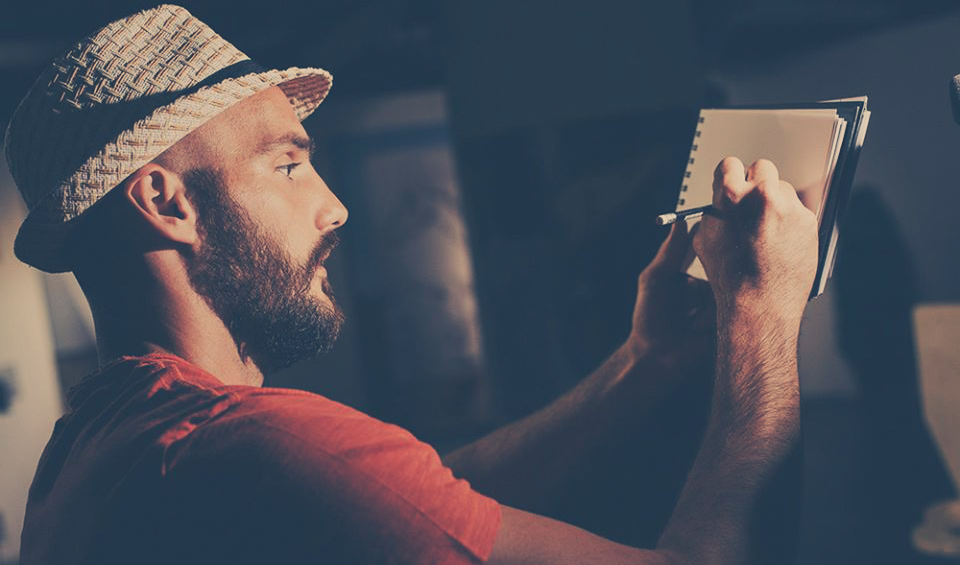
(Interview and portraits by Ben Heine)
.