Showing posts with label earth. Show all posts

Astro Cruise 15 - Earth Wrapped in a Plastic Bag


Earth Wrapped in a Plastic Bag
Astro Cruise 15

Big size prints on demand www.benheine.com

#plastic #earth #rainbow #fly #worlds #dream #cosmonaut #energy #artprints #creative #colors #stars #universe #love #nature #astronaut #life #digital #digitalart #prints #astrocruise


A celestial scenery captured during my travel from Brussels to Rome.
I travelled there to talk about my work at "Creative Pro Show".

.

Freedom is not far, make a wish... I intended to represent a girl walking above clouds from one pyramid's top to another. I wanted to express a dream I had recently. I hope you can feel it too. This is a picture I took from a plane a few weeks ago when I traveled to Italy. I also made the quick sketch. The above photo has been shot with the Samsung NX10, provided by Samsung Electronics Co., Ltd. (See the whole Pencil Vs Camera album on Flickr)


.
(click HERE or on the image to enlarge it)

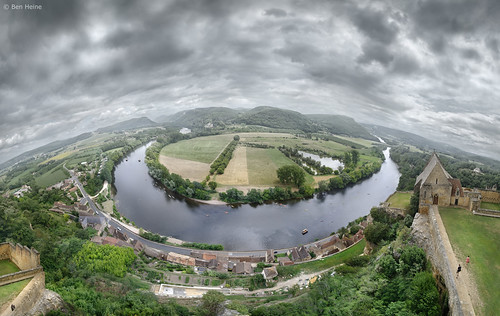
This is the landscape I saw from the top of Beynac Castle, in the Dordogne department of France. I visited this beautiful place last week. I spent several days to assemble and edit some 20 photos I took there (no Fisheye and no AutoPano). The original image is huge and it was quite a challenge this time because my graphic tablet just got damaged and I had to do everything with a standard mouse. :)
.
Random details:
.
Details Beynac

The above photos have been shot with the Samsung NX10,
which has been provided to me by Samsung Electronics Co., Ltd.

© 2010 - Ben Heine
.

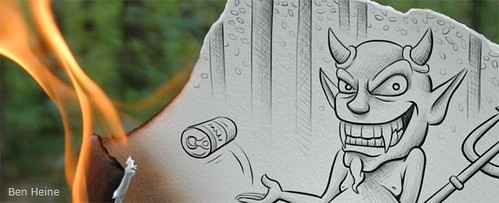
End the pollution of the planet, save our Earth!
(I sadly discovered this in a forest, I took the
photo and also made the rough sketch)
.
Detail:


Mr Peace
.
All The World
Is Looking


By Peter S. Quinn

All the world is looking,
For some peace;
In beauty of nature,
To harmonize and please.
And in the lights,
Of things you see;
You shall be rewarded,
With the greenest tree.

For nature is like perfect art,
It bewitches your eyes with beauty.

All the world is looking,
For kindness of thought;
Every step forward,
Mankind themselves brought.
And if it's destructive,
They brought it self in;
All foolishness of any kind,
Seldom shall win.

For nature is one in every part,
And man soon pays for all his sin.

As I grow older,
I dwell on and see;
The beauty of nature,
In each every tree.
And colors of summer,
In blooms that glows;
And rivers with waters,
That freely flows.

Let there be nature on this earth,
Be its friends not its foes.

Our story continues,
As life goes on;
This purest of beauty,
Under the sun.
Where we are born,
Innocent and all free;
Together to understand,
Both you and me.

Let our values have a rebirth,
As our love for all life grows.
.
Freedom at Last
.
© 2009 - Ben Heine
.
Let Freedom Conquer

By Peter S. Quinn

Let freedom
Conquer our earth
Let it be our
Playful garden
Give every trial
Its own worth
Let this only
In peace be starten'
Every our new minute
Is to live
Prosper onward
And further grow
We must fight
For freedom's give
And tomorrow shall rise
In its glow

Let freedom
Be our singing on
Fill the air
With its soft melodies
Every kindness denial
Be gone
Over the green fields
Swaying trees
My hope is your hope
All the way
That to our load
Has been given
There comes a morning
Of new day
That through harmony
Is all driven

Let me be your guardian
As you're mine
On to the many roads
Here ahead
Stop every teardropp
Bring on sunshine
To those
That in sorrow bled
Raise every freedom
To its true glory
Those feelings
Must never be alone
Let our futures
End in a happy story
Giving the mood
And the right tone
.

A Piece of Earth
.
© 2009 - Ben Heine
.
A visual souvenir I brought back from Normandy.
.
Come Dream like
a Cloud Above


By Peter S. Quinn

Come dream like a cloud above
Uplifting deep and its sunshine
So much of misty worthy of
In every faraway horizon line
Deep as the river is giving
From its watery stream going
Where every gleam is living
And from both sides flowing

A day that has come from deep
Just to bring you shine things
With hours and moments to keep
That with every enjoyment sings
Rain that comes to drip drop
Making freshness more clear
Giving its flow and its loop
In everything that's now near

Come dream in liking of July
Shift windblown grass like hair
Everyone’s fate there must lie
In completeness of emerging year
Where light touches soft earth
Never a fraction in icily fears
And blossoms of bright is worth
Each of the day ongoing careers
.
I N V I N C I B L E
.

© 2009 - Ben Heine
.
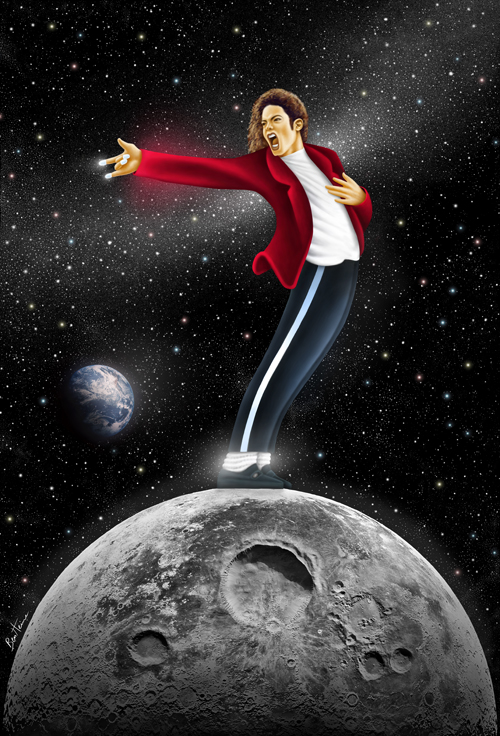
One of my portraits of the King... RIP
.
We Had Him


By Maya Angelou (*)

Beloveds, now we know that we know nothing, now that our bright and shining star can slip away from our fingertips like a puff of summer wind.

Without notice, our dear love can escape our doting embrace. Sing our songs among the stars and walk our dances across the face of the moon.

In the instant that Michael is gone, we know nothing. No clocks can tell time. No oceans can rush our tides with the abrupt absence of our treasure.

Though we are many, each of us is achingly alone, piercingly alone.

Only when we confess our confusion can we remember that he was a gift to us and we did have him.

He came to us from the creator, trailing creativity in abundance.

Despite the anguish, his life was sheathed in mother love, family love, and survived and did more than that.

He thrived with passion and compassion, humor and style. We had him whether we know who he was or did not know, he was ours and we were his.

We had him, beautiful, delighting our eyes.

His hat, aslant over his brow, and took a pose on his toes for all of us.

And we laughed and stomped our feet for him.

We were enchanted with his passion because he held nothing. He gave us all he had been given.

Today in Tokyo, beneath the Eiffel Tower, in Ghana's Black Star Square.

In Johannesburg and Pittsburgh, in Birmingham, Alabama, and Birmingham, England

We are missing Michael.

But we do know we had him, and we are the world.


---------------

(*) Dr. Maya Angelou is an American poet born in 1928. She is known as one of the great voices of contemporary literature. As a poet, educator, historian, best-selling author, actress, playwright, civil-rights activist, producer and director, she continues to travel the world, spreading her wisdom. Within the rhythm of her poetry and elegance of her prose lies Angelou's power to help readers of every orientation span the lines of race.

The above poem was written by Maya Angelou for Michael Jackson's public memorial at the Staples Center in Los Angeles. It was read by Queen Latifah, one of the many celebrities that paid tribute to the King of Pop. (Source)

.
.
.
Details
.
Save Our Planet
.

Obama Gives Biofuels a
Presidential Jumpstart


By "Environment News Service"

To spur biofuels research and commercialization, President Barack Obama signed last Tuesday a Presidential Directive establishing a Biofuels Interagency Working Group. He announced his administration's notice of a proposed rulemaking on a national Renewable Fuels Standard and announced $786.5 million in additional Recovery Act funds for renewable fuel projects.

"We must invest in a clean energy economy that will lead to new jobs, new businesses and reduce our dependence on foreign oil," said President Obama. "The steps I am announcing today help bring us closer to that goal. If we are to be a leader in the 21st century global economy, then we must lead the world in clean energy technology. Through American ingenuity and determination, we can and will succeed."

The Biofuels Interagency Working Group will be co-chaired by the secretaries of agriculture and energy and the administrator of the Environmental Protection Agency and will operate in cooperation with the National Science and Technology Council's Biomass Research and Development Board.

The Working Group is tasked with developing the nation's first comprehensive biofuel market development program. It will use existing authorities and identify new policies to support the development of next-generation biofuels, increase flexible fuel vehicle use, and assist in retail marketing efforts.

>>> Read the full article
.
Africa Africa!
.
© 2009 - Ben Heine
.
Africa, My Africa

By Ola Joseph Kolawole

Back in the years of the b.c.
When I was but a spirit in the heavenlies
Spying over the happenings on this miraculous planet,
I majored on the study of continents…

I had special interest in this spectacular one
Traced back to Cush, a man of colour
Blessed by Eledua – the Creator of creation
Obviously vast, leading her equals

Her land expanded by the hours –
They called it Ethiopia and the Egyptian empire
She was first in making wonderful inventions
And not lagging behind in linguistics and education

Her map became a riddle for the WISE:

Looking at the map from the west,
I see a gun.
Firing out intellects and academics
Imparting the whole wide world with wisdom.

Looking from the east,
I see a big foot,
Walking around the world
Preaching her precious cultural heritages

>>> read the full poem
.
Obama's Magic
.
.
Ink on paper (digital colors)
.
He Is a Real
Magical Man


By Peter S. Quinn

He is a real magical man
Walking down the magical span
Making so much magical for everyone’s treat

Not everything needs to be true
Though it’s going to be like it seems too
In its way on every walking street

Magical man, please have a try
There is deep and there's blue sky
Magical man, make your own magical plan

He’s exited for what he is
Reaching the earth in watery bliss
Magical man, never reaching your own feet

Magical man keeps on flying
Go all the way in your trying
Bringing it all up into reality
In magic’s for all to see

Not everything needs to be true
Though it’s going to be like it seems too
In its way on every walking street

Magical man please has a try
There is deep and there's blue sky
Magical man, make your own magical plan

He is a real magical man
Walking down a magical span
Making so much magical for everyone’s treat
.
Give a Heart
.
.
Give a Heart


By Peter S. Quinn

Give a heart to your love
There’s always something there
Like drifting clouds above
Feelings to go everywhere
Summer dreams that go by
Or winter tales in mist
Spring’s forever blue sky
Autumn colors tinctured twist

You know you have it all
Inside where your beat goes
And from there will call
When roots of passion grows
For love is like a green tree
Leaves that shiver in the breeze
And from the inside will see
How kindness always frees

You have so much to give
Or take for what you’ll need
Each goal an example to live
And thus how love should lead
.
Kind gift for me from
"Barcoded Maggot"

.
.
This is a graphic tribute
from "Barcoded Maggot".
Thanks a lot, I really like all
these symbols and soft colours.
.
By the way, I strongly recommend
Barcoded Maggot's artistic and political work
.
What Next ?
.
.
It's A Small World After All
.
By Greg Peel
(FN Arena News)
.
This weekend in Washington saw a meeting of what is known as the "Group of 20" nations - those representing the most powerful economies in the world. It's a little bit of a misnomer, as the G20 is actually 19 nations plus the European Union. The European Union itself consists of 27 nations, although just to confuse the issue there is cross-over.

Meetings of the G20 are not common, and one can imagine that getting 20 countries to agree on something over a weekend is no small task. More common are meetings of the G7 - the most powerful among the powerful. The G7 consists of the United States, Japan, Germany, France, Italy, The United Kingdom and Canada.

To bring that up to the G20, we add Argentina, Australia, Brazil, China, India, Indonesia, Mexico, Russia, Saudi Arabia, South Africa, South Korea and Turkey, and the European Union.

The European Union consists of 27 countries which trade as a bloc, and as a bloc the EU has an economy greater than that of the US. Of the 27 members only 15 have adopted the euro as their currency. Germany, France, Italy and the UK are all members, so by adding the EU to the G19 you add Austria, Belgium, Bulgaria, Cyprus, the Czech Republic, Denmark, Estonia, Finland, Greece, Hungary, Ireland, Latvia, Lithuania, Luxembourg, Malta, the Netherlands, Poland, Portugal, Romania, Slovakia, Slovenia, Spain and Sweden.

In other words, 42 nations were represented in Washington, one way or another, representing about 90% of the world economy.

The reason they were there is because the world's economy is in dire straits. Prior to the meeting we learnt that Europe is the first to officially record a recession - being two consecutive quarters of negative GDP growth. It is actually the 15 members of the euro currency which have collectively fallen into recession, posting negative 0.2% growth in the third quarter following the same result in the second. The full EU also posted a negative 0.2% figure but was on zero in the second quarter. The biggest economy within the EU - Germany - saw a negative 0.2% following a negative 0.4% previously. The second biggest - the UK - saw an ominous 0.5% drop following a zero result previously. Let's not get hung up on the definition - Europe is in recession.

That Europe should be the first major economy to enter recession is illustrative of why the G20 saw urgent cause to meet in Washington on the weekend. For we all know that the real problem is derived in the US - creator of the subprime mortgage, the CDO, the CDS, and forty times leverage for investment banks. But in today's financial world interconnectivity ensures that no significant economy can operate in isolation. The world has weaved a tangled web. No economy can be spared the ramifications of the actions of others.

We all now appreciate the common chaos theory adage that a butterfly flapping its wings in South America can cause a typhoon in Japan (or variations on that theme). If the theory needed any proof then it has come in the knowledge that an unemployed garbage collector defaulting on a mortgage he should never have been given in Jacksonville Florida in early 2007 has led to the UK seeing negative GDP growth of 0.5% in the September quarter of 2008.

The global financial crisis of the twenty-first century is a result of the rapid movement into the Third Age of modern mankind. The Agricultural Revolution brought about the First Age of civilisation some eight thousand years ago, leading to the creation of democracy and the rise and fall of mighty empires. The Industrial Revolution ushered in the Second Age in the late nineteenth century. Therein followed two world wars and, in between, the Great Depression. By late in the twentieth century we were experiencing the Information Revolution - that of the internet and ever-increasing computer power in ever-decreasing chips. This is the Third Age, and it is this age that more than ever before has connected the world through a web of information channels.

Perhaps Sir Walter Scott might look down and suggest an amendment to his famous poem - "Oh what a tangled world-wide web we weave".

The Information Age has allowed world trade to expand at a rapid pace, allowed for developed nations to outsource their manufacturing and service centre bases to emerging nations, and allowed large financial institutions to transcend borders. The "developed" world has expanded and homogenised, and inextricably interconnected.

Little did Joseph Heller realise when he wrote his iconic Catch-22 that the line "What's good for M & M Enterprises is good for the country" would still be able to be satirically applied today. Heller lampooned the shortcomings of "modern" capitalism back in 1961, highlighting a self-feeding economic circle. The collapse of the world economy in 2008 has close correlation with the collapse of M & M Enterprises.

Prior to September 2008, the world was still hanging on to a notion that the global economy remained divided along distinct lines. It was first thought in 2007 that the "subprime crisis" would be contained in the US. When the situation became more worrying, the International Monetary Fund concluded that Europe and even Japan would rise to balance the economic problems in the US, and it was a common assumption that the booming Chinese economy was "decoupled" from the US. Australia took much solace in the latter, being more worried about too-rapid economic growth in early 2008 than ever contemplating recession.

It took the fall of Lehman Bros to prove everyone wrong, but if it hadn't have been Lehmans then some other event would have at some point inevitably triggered the financial market implosion of the last three months. The world now faces recession, of that there is little disagreement. And the world now realises the extent of global financial connectivity that transcends old-world concepts of nation-states and borders. To address the problem, and to ensure it never happens again, a globally coordinated plan is needed.

Enter the G20.

Rome was neither built nor dismantled in a day, and nor was the G20 ever going to solve the world's problems in a weekend. However, the first step towards the solution of any problem is recognising there is one, and the hasty organisation of a G20 meeting is testament to just that. It would have been easy to turn the meeting into a US-bashing fest, if one assumes the heart of the problem lies in the world's most powerful individual economy, but it would not have been helpful. To be helpful the G20 needed to acknowledge that a new global order needs to be established - a united regulation of the global economy.

That, at least, had to be the second step. The first was to react immediately to the problem at hand and prevent further economic collapse.

Again, it was never going to be possible to draw up a consummate plan of global attack among twenty representatives in one weekend. Thus with the UK prime minister Gordon Brown taking a leading role, the G20 nations collectively agreed to continue to stimulate their own economies individually as the most effective means of preventing further hardship. Stimulation would be both fiscal - pumping government money into the economy - and monetary - cutting interest rates. This is exactly what everyone has been doing anyway but whereas previously it was a case of "follow the leader" now all have agreed in the merit of such policy and thus can feel comforted to keep up the good work as part of a team effort. In short, all members agreed to keep doing "whatever it takes".

To address the second step, it had to first be decided just who was to blame for the global economic crisis. No doubt there would have been small groups happy to point the finger squarely at the US over informal drinkies, but given the US dollar is the agreed reserve currency and no country can honestly say they are completely blameless in letting it get to this point there was little to be gained from playground behaviour. To that end, it was agreed by the end of the summit that "policy-makers, regulators, and supervisors in some advanced countries" were the culprits.

In other words, "us".

With that established, the next task was to figure out how to prevent the disaster ever happening again. Meetings of the G20 and even the G7 are notorious for achieving a lot of talk and a little action, and usually the sort of "agreeing to move forward with unbinding commitments" type rhetoric that Sir Humphrey Appleby would have been most proud to have drafted. One only need take the example of the World Trade Organisation - of a similar membership - and the infamous "Doha round" of trade talks which have continued unresolved for seven years.

And so like guilty school children, this time the G20 agreed upon what is loosely a six-point plan of immediate action, or at least immediate action in the form of an agenda for reform to be ratified at the next summit, planned for March 31. Between now and then the details will be honed. Like any summit of world-leaders, this plan was drafted before anyone actually arrived. It just needed a collective stamp of approval.

The first step is an agreement to complete the Doha round of trade talks by the end of the year.

Thereafter things get a bit hazier, but include better risk management practices at banks, accounting standards to be put in place to account for notorious "off-balance sheet vehicles", standards to address the conflict of interest of ratings agencies (which advise on the creation of instruments they then rate, and profit from the practice), the development of a clearing house for credit default swaps (already underway in the US) and an assessment of the adequacy of hedge fund best practises, which will prove the first step towards regulation of the global hedge fund industry.

Perhaps the most significant step, nevertheless, was agreement on the creation of a "college" of supervisors of the world's biggest banks. The college will be drawn from regulators of many countries. This is an acknowledgement that the global financial market has, as always, moved ahead of the regulators, and as always regulation needs to catch up. This time that catch-up will be globally coordinated and overseen. Homogenous global regulation for a homogenous global financial market.

Agreement to act on such measures in time for the next summit in March was enough for host George Bush to declare the G20 meeting a great success. Bush would have no doubt hoped to have left such a legacy, for it will be Barack Obama in the chair at the next meeting, and a Democratic Congress that leads the charge on the wider agenda of reforms.

Those reforms have been tabled as a total of 47 action items in eight pages of the official document released after the summit. Their focus is to establish a series of new safeguards for the fragile and opaque global financial system. The attempt therein is to better flag risky practices and shortcomings in regulation so that the domino effect of corporate failure cannot again lead to such an economic disaster as has been experienced in 2008.

The G20 wants to keep a strict eye on South American butterflies.

George Bush was also pleased that the plans suggested at the summit did not amount to an attempt to undermine the fundamentals of free market capitalism per se. However, by its very definition free market capitalism can never be fully controlled. Regulation will always chase market practice - practice that is questionable in retrospect but nevertheless legal at the time. The market also fears a swing back to over-regulation - regulation that might be socially laudable in its intent but economically stifling in its application.

Wall Street did not respond favourably ahead of the meeting, falling sharply on Friday. But little can be drawn from the move, given squaring up on a Friday has become common practice and given the present lack of participants means sharp falls can occur in ten minutes flat. Such moves are not reliably representative of more general sentiment. The global market knows it will take time for the G20's actions to bear fruit, and the immediate plan of doing "whatever it takes" (fiscal and monetary stimulus) implies to some there is no immediate coordinated plan at all. But either way the great deleveraging process continues and that has not been forced by any global government regulation. It has been forced by free market capitalism at work.

The focus is now on the global economy and just how bad things might yet get. If "whatever it takes" does manage to put a floor under markets from here, the next problem is just how quickly economic growth can return if weighed down by the sort of over-zealous regulation that may ultimately result from this first G20 gathering. There are few who would not agree that "something had to be done", other than those who believe the only solution is to let global chaos run its full course - the ultimate purge. But among those appreciating the need for reform, it then becomes a case of balance.

As the history of modern mankind has passed through each of the previous Ages, there has been disruption. Disruption that requires a long process to reach resolution, if ever at all. The Third Age will prove no different.

-------------------

--> This analysis appeared on Fnarena.com
.
The Magic of a Smile
.
© 2008 - Ben Heine
.
Kiss The Earth

.
By Thich Nhat Hanh (*)

Walk and touch peace every moment.
Walk and touch happiness every moment.
Each step brings a fresh breeze.
Each step makes a flower bloom.
Kiss the Earth with your feet.
Bring the Earth your love and happiness.
The Earth will be safe
when we feel safe in ourselves.

(*) Thich Nhat Hanh (pronounced Tick-Naught-Han) is a Vietnamese Buddhist monk. During the war in Vietnam, he worked tirelessly for reconciliation between North and South Vietnam. His lifelong efforts to generate peace moved Martin Luther King, Jr. to nominate him for the Nobel Peace Prize in 1967. He lives in exile in a small community in France where he teaches, writes, gardens, and works to help refugees worldwide. He has conducted many mindfulness retreats in Europe and North America helping veterans, children, environmentalists, psychotherapists, artists and many thousands of individuals seeking peace in their hearts, and in their world. Read more

-------------

--> The poem appeared on poetseers.org

You've Got a Choice
.© 2008 - Ben Heine
.
Energy Vs Pollution:
How to clean the air?
.
By Dr Jagdish P N Giri (*)
.
The new growth wave on emerging trends in corporate social responsibility aims at evaluating impacts the globalisation might have on natural environment and global environmental and energy policy approaches.

An ongoing debate on inter-relationships among trade/investment, energy and environment, its footprints on environment and climate and quality of energy business in terms of natural environments in countries exporting environmental goods and energy services in the context of producers and consumers of a variety of energy resources viz carbon, hydrogen and renewable across the globe, including developing and transition economies, has already taken a significant shape.

Energy use and supply is of fundamental importance to society and, with the possible exception of agriculture and forestry, has made the greatest impact on the environment of any human activity a result of large-scale and pervasive nature of energy related activities. Although energy and environment concerns were originally local in character for example, problems associated with extraction, transport or noxious emissions they have now widened to cover regional and global issues such as acid rain, trans boundary impacts of energy use and the greenhouse effect.

Such problems have now become major political issues and the subject of international debate and regulation. It is for this reason that there is a need for the emergence of new growth wave on corporate social responsibility dedicated to energy and environmental issues on sustainable development and millennium development goals.

Globalisation, energy and environment is an inter-disciplinary corporate social responsibility in terms of evolving dimensions of society and business strategies aimed at natural scientists, technologists, economists and the international social science and policy communities covering the direct and indirect environmental impacts of energy acquisition, transport, production and use.

A particular objective of the debate is to cover social, economic and political dimensions of such issues at local, regional and international level. The relatively recent awareness about environmental concerns have convinced the policy makers to extend their attention beyond the black-box, least-cost models and consider other aspects of their policy decisions. As such, the policy makers have now moved ahead of analysis in taking a more comprehensive approach to energy strategy.

Consequently, the debate forum is inviting stakeholders from all countries with contributions that would help Aaditya Energy Foundation, based in Chennai to lead a global movement for sustainable energy, environment and economy in 21st century to outline more clearly the major debate around taming versus uncritically supporting globalisation and global energy/ environmental policy.

The debate aims to engage experts from exporting developing and transition economies as well as specialists from industrialised countries to share their experience on various aspects of energy resource exploitation, its environmental consequences, on consumption patterns, and markets, with corporate environmental and social responsibilities. In the near term energy technology perspective defined by International Energy Agency seems to provide a viable direction to energy business at large.

ENERGY TECHNOLOGY PERSPECTIVE
.
Secure, reliable and affordable energy supplies are fundamental to economic stability and development of the nation. Threat of disruptive climate change, erosion of energy security and growing energy needs of emerging economies of Asia like India and China, all pose major challenges for energy decision makers, as well as energy producers, traders and consumers.

That can only be met through innovation, adoption of new cost-effective technologies, and a better use of existing energy efficient technologies. Energy technology perspectives' present status and prospects for key energy technologies and assesses their potential; to make a difference in mid century term, in the following aspects:

• How much can technology contribute to securing adequate and affordable energy supplies and lower CO2 emissions? What energy technologies hold the most promise? How long will it take?

• At their 2005 summit, G-8 leaders confronted these questions and decided to act with resolve and urgency. They called upon the International Energy Agency to provide advice on scenarios and strategies for a clean and secure energy future. Energy technology perspectives are a response for G 8 request.

• Numerous innovative works demonstrates how energy technologies can make a difference in a series of global scenarios to 2050. It reviews in detail the status and prospects of key energy technologies in electricity generation, buildings, industry and transport. It assesses ways the world can enhance energy security and contain growth in CO2 emissions by using a portfolio of current and emerging technologies. Major strategic elements of a successful portfolio are energy efficiency, CO2 capture and storage, renewable energy resources and nuclear power.

• While technology does hold great promise for the future, we must act now if we are to unlock the potential of current and emerging technologies and reduce the impact of fossil; fuel dependence on energy security and the environment. The key challenge in global energy policy is to create an energy system that supports continuing economic development and considerably reduces the risks of climate change. Energy efficiency is currently the most affordable tool to mitigate climate change.

• The fourth assessment report of the IPCC documents many of the large number of energy efficiency policies and measures that have already been implemented worldwide on the supply and demand side.

The accelerated technology scenarios (ACTs ) that form the backbone of energy technology perspectives demonstrate that by employing technologies that already exist or are under development, the world could be brought onto a much more sustainable energy path.

The scenarios show how energy related CO2 emissions can be returned to their current levels by 2050 and the growth of oil demand can be moderated. It also shows that by 2050, energy efficiency measures can reduce electricity demand by a third below the baseline levels. Savings from liquid fuels would equal more than half of today's global oil consumption, after setting about 56% of growth in oil demand foreseen in the baseline scenario. The substantial changes demonstrated in the accelerated technology (ACT) scenarios are grouped in:

• Strong energy efficiency gains in the transport, industry, commercial and domestic sectors,

• Electricity supply becoming significantly decarbonised as the power generation mix shifts towards nuclear power, renewables, natural gas and coal with CO2 capture and storage,

• Increased use of biofuels for road transport.

(*) Dr Jagdish P N Giri is the founder and ED of Aaditya Energy Foundation, Chennai. He can be reached at jpngiri@aadityaenergyfoundation.com

---------------

--> This article appeared on Commodityonline.com

Creative Commons License
How Will Global Warming
Affect Our World?

.
© 2008 - Ben Heine
.
Is Climate Change
Making Us Sick?
.
By Barbara Lantin (*)
.
More floods, heat waves, insect-borne disease... Doctors are worried about how global warming will affect our health

You might think that a little climate change would not go amiss in the British Isles. We’d have more warm summers and fewer freezing winters. What’s wrong with that?

Ask the people of Yorkshire. As a result of global warming, many homeowners this week are up to their waists in muddy water. Andflooding could be just the beginning of our worries. This week a paper in the British Medical Journal gave warning that climate change could be particularly damaging to the health of people in the developing world, but research also suggests that it could be bad news for Britain. Delegates at a conference in London on Tuesday will be told that global warming will drive up rates of cardio-respiratory disease, diarrhoea and insect-borne diseases such as malaria in the UK.

Global warming is believed to be occurring because human activities, particularly burning fossil fuels, have released into the atmosphere huge amounts of carbon dioxide and other “greenhouse gases” that are trapping more heat in the Earth’s lower atmosphere. Average global surface temperatures are already rising and are predicted to increase by between 1.4C and 5.8C over the next century, bringing a higher risk of floods, droughts and heat waves.

“We are already witnessing the effects of climate change on health,” says Dr Hugh Montgomery, the director of the Institute for Human Health and Performance at University College London, who has organised next week’s conference at the Royal College of Physicians. The heat wave of 2003, when temperatures in the northern hemisphere reached the highest on record, killed up to 35,000 people – 2,000 of them in the UK. Last summer’s floods have been shown to increase rates of mental illness (see box, left). And milder weather is likely to be behind the arrival here from Europe of the midge-borne cattle disease bluetongue.

“Each of us is, in effect, moving 6km (4 miles) south a year or 60km a decade,” says Dr Montgomery. “The result will be fewer deaths from colds and flu, but more from strokes and heart attacks because of the heat. Global warming means a higher baseline temperature from which there will be more surges and extreme events.”

Every one degree rise means 75 deaths

By the 2080s we can expect to see weather like that of August 2003 every year. This is bad news. Studies by the Department of Health have shown that in June 2006, when temperatures in the UK soared, there were 75 extra deaths for every one degree rise on the thermometer, with children, older people, those living in built-up areas and the chronically sick most at risk. Deaths can be caused by the body’s inability to adapt and cool itself sufficiently. However, the main causes of death and illness are cardiovascular and respiratory disease.

When it’s hot, large quantities of blood are circulated to the skin to keep it cool, placing a sometimes catastrophic strain on the heart. In addition, heat causes ozone concentrations and pollution levels to rise. This increases asthma rates and causes extra deaths from a range of respiratory illnesses.

The heat is also likely to bring more unwelcome insects to these shores. While it is unlikely that malaria will take hold – the disease is controllable in countries with good healthcare – other disease-carrying insects (known as vectors by scientists) may arrive.

“Climate change poses a significant risk of the introduction of vector-borne diseases into Europe and indeed there is evidence that such change has already happened,” says Paul Hunter, a professor of health protection at the University of East Anglia. “Several vector-borne diseases not previously described in Europe have appeared, including chikungunya [a virus carried by Asian tiger mosquito that causes fever, headache and joint pain]. There was an outbreak in Italy last summer.”

Warmer, drier weather could change our landscape, too. Professor Ian Crute, the director of the Biotechnology and Biological Sciences Research Council’s Rothamsted Unit, predicts more maize grown, a possible regeneration of the tree fruit industry and the movement of greenhouse-grown fruit and vegetables to the north. “But I don’t expect we’ll ever have acres of sunflower fields or olive groves,” he says.

However, climate change will have a big impact on the way we live. “Events like the drought that has caused Australian wheat crop failure – and affected worldwide wheat prices – will become common. The era of cheap food that we have enjoyed since the Second World War is ending and people on low incomes will find it increasingly difficult to eat a healthy diet.”

What can we do about it?

Failure to act could have catastrophic consequences but striving to cut carbon emissions could produce unexpected benefits. “What we do to deal with climate change could bring about a revolution in public health,” says Ian Roberts, a professor at the London School of Hygiene and Tropical Medicine. For example, reducing our dependence on cars should mean that more people walk and cycle, leading to a decrease in obesity. It should also reduce road accidents, which kill more than 3,000 Britons a year.

“At the moment we are in a vicious cycle,” says Professor Roberts. “We use our cars more and get fatter because we are not exercising. As we get heavier, we become more dependent on fossil fuels because we are reluctant to walk or cycle at all. We need to break this loop.

“If we design climate change policy to max-imise the health benefits, it will be the silver lining to the cloud of global warming. It’s the only bit of good news in the whole story.”

Rising woes

Increased risk to our physical health won’t be the only result of climate change, our mental health may also be affected.

Sara Wolcott* and family were among the 1,950 people made homeless by floods last July in Gloucestershire (see picture above). “After two months, I had panic attacks when my two sons or my husband left me alone. I kept thinking about all the things we’d lost, reliving it over and over,” she says.

Wolcott, who saw her GP and was prescribed antidepressants, isn’t alone. Soon after the floods, Gloucestershire Primary Care Trust (PCT) had an increase in reports of mental health problems. In response, it set up the People Recovery Group to help those suffering stress and anxiety.

“There is evidence that disasters can increase incidence of mental health problems,” says Dr Nevila Kallfa, of Gloucestershire PCT. " People are living not just with the loss of their homes and posessions but with the constant fear that it will happen again.”

Wolcott agrees: “If floods become the norm, it would add an extra level of stress that’s bound to affect people’s health.”

----------------------

(*) Barbara Lantin is a freelance health writer who has contributed for many years to national newspapers, magazines and websites. Her work appears regularly on The Daily Telegraph health-and-wellbeing pages and on the Telegraph website. She has also written consumer information materials for Government departments and others. She is vice-president and former chair of the Guild of Health Writers.

--> The above article appeared on www.timesonline.co.uk
.
Creative Commons License
.
Over-Consumption...
Planet Earth in Danger !
.
.
Fast Food
.
By Richard Thompson

Big mac, small mac, burger and fries
Shove 'em in boxes all the same size
Easy on the mustard, heavy on the sauce
Double for the fat boy, eats like a horse.
Fry them patties and send 'em right through
Microwave oven going to fry me too
Can't lose my job by getting in a rage
Got to get my hands on that minimum wage.

Shove it in their faces, give 'em what they want
Got to make it fast, it's a Fast Food Restaurant.

Shake's full of plastic, meat's full of worms
Everything's zapped so you won't get germs
Water down the ketchup, easier to pour on
Pictures on the register in case you're a moron.
Keep your uniform clean, don't talk back
Blood down your shirt going to get you the sack
Sugar, grease, fats and starches
Fine to dine at the golden arches.

Shove it in their faces, give 'em what they want
Got to make it fast, it's a Fast Food Restaurant.

Baby thrown up, booth number 9
Wash it down, hose it down, happens all the time
Cigarettes in the coffee, contact lens in the tea
I'd rather feed pigs than humanity.

Shove it in their faces, give 'em what they want
Got to make it fast, it's a Fast Food Restaurant.

(The poem appeared on compsci.rice.edu)
.

.
"Planet Health" for Obesity Reduction
in School Children—Readily Accepted
and Cost-Effective

.
"Planet Health"

- Physical activity and nutrition lessons woven into existing middle school curriculum
- Effective in reducing TV viewing time in both boys and girls and decreasing obesity in girls
- Readily adopted by teachers; Boston Public Schools expand its use
- Cost-effective and projected to save money in later life

"Background"

Between 1980 and 1999 the prevalence of overweight in the United States nearly tripled (from 5% to 14%) among adolescents and nearly doubled (from 7% to 13%) among children 6 to 11 years of age. This trend forecasts an increase in chronic disease as the younger generation ages. Little is known about effective ways to reverse this alarming trend, although its root cause of insufficient physical activity in relation to excess calories consumed is well known. Because most children spend a substantial portion of their day in school, the school environment is a promising venue for educational and experiential lifestyle interventions.

Context

Focusing on how to increase physical activity and improve dietary habits, researchers at Harvard University’s CDC-supported Prevention Research Center (PRC) developed* an interdisciplinary curriculum (called Planet Health) for public middle schools, in explicit collaboration with teachers and school principals. The curriculum was designed to fit easily into existing language, math, science, social studies, and physical education classes; to foster basic educational competencies required by the state of Massachusetts; and to provide materials easy for teachers to use. The content emphasizes increasing consumption of fruits and vegetables, decreasing consumption of high-fat foods, decreasing television viewing, and increasing physical activity.

Methods and Results

Phase I

A 2-year randomized controlled trial* of the curriculum in 10 public middle schools in Boston yielded a significant reduction in television watching for both girls and boys, and a significant decrease in the prevalence of obesity among girls.

Phase II

After the Boston Public Schools (BPS) expressed interest in disseminating Planet Health, a partnership was formed to pilot test how feasible and sustainable the curriculum could be in public school settings where resources are constrained. Using the model of community-based participatory research, a project advisory board representing the key stakeholders within the BPS and the Harvard PRC guided the partnership from its inception. The BPS selected a sample of six inner-city middle schools to participate, while the PRC provided the Planet Health curriculum, training workshops for more than 100 teachers, small stipends for teacher coordinators within each of the participating schools, and research expertise to assess diffusion of the program.

The diffusion study demonstrated that 76% to 100% of teachers found the curriculum highly acceptable and 78% to 100% planned to continue using it. More than 90% found the curriculum effective and believed that it made a positive contribution to their classes.

Consequences

Satisfied that its criteria for success were met, BPS endeavored to sustain and expand use of the Planet Health curriculum through independent funding. It first secured funding from the U.S. Department of Education’s Physical Education for Progress for pilot expansion to 12 schools in 2002–2003. Subsequently, BPS received financial support for further expansion from the Boston Public Health Commission under the auspices of the new STEPS to a Healthier U.S. project, sponsored by the U.S. Department of Health and Human Services.

Impact and Potential Impact

Planet Health is being implemented in more than 120 schools in Massachusetts, and in the past two years, more than 1,000 teachers have been trained to use it. In addition, 2,000 copies of the curriculum have been purchased by interested parties in 48 states and 20 countries, potentially benefiting many thousands of children.

An independent economic analysis of Planet Health was conducted based on an estimated program cost of $14 per student per year and an obesity reduction of 1.9% persisting into adulthood among girls. Based on these assumptions, the program was found to be highly cost-effective—in fact, more cost-effective than commonly accepted preventive interventions such as screening and treatment for hypertension. Furthermore, the program was projected to save money via avoided medical costs and productivity losses later in life. For every dollar spent on the program in middle school, $1.20 in medical costs and lost wages would be saved when the children reach middle age.

Planet Health has demonstrated effectiveness, feasibility, acceptability, and sustainability in a public school environment. The curriculum has been found to be cost-effective and, dollar for dollar, to save society money in the long run.

*The original efficacy study was conducted under the auspices of the National Institutes of Health.

References

Gortmaker SL, Peterson K, Wiecha J, Sobol AM, Dixit S, Fox MK, Laird N. Reducing obesity via a school-based interdisciplinary intervention among youth: Planet Health. Archives of Pediatrics and Adolescent Medicine 1999;153:409–18.

Wang LY, Yang Q, Lowry R, Wechsler H. Economic analysis of a school-based obesity prevention program. Obesity Research 2003;11:1313–24.

Wiecha JL, El Ayadi AM, Fuemmeler BF, Carter JE, Handler S, Johnson S, Strunk N, Korzec-Ramirez D, Gortmaker SL. Diffusion of an integrated health education program in an urban school system: Planet Health. Journal of Pediatric Psychology 2004;29:467–74.

---------------------

--> The above study appeared on www.cdc.gov (Center for Disease Control and Prevention)
.
Creative Commons License
.
Child Of The Universe
.
.
I dedicate this drawing to my
good friend Marcin Bondarowicz

-----------------------

Child Of The Universe

By L. C. Brown

The universe exploded,
A piece became the earth.
I rode in on a meteor,
Its crash was my birth.
Lava took me for a ride,
To cool in the sea.
I waited for millions of years,
For nature to use me.
I became a child of the universe,
With no place to go.
Then God gave life a meaning,
That's how I got my soul.
.
(The poem appeared on poemhunter.com)
.
Creative Commons License
.