

Showing posts with label Death. Show all posts
Showing posts with label Death. Show all posts
Petit hommage à la chanteuse Maurane (+ biographie)

Maurane, de son véritable nom Claudine Luypaerts est née le 12 novembre 1960 à Ixelles en Belgique. Ses parents sont musiciens : sa mère est pianiste et son père est directeur d'un conservatoire de musique. Elle grandit avec son frère et sa sœur, baignés dans la musique classique, entre Bach et Debussy. La jeune Claudine commence l'apprentissage de la musique par des cours de violon à l'âge de huit ans. Détestant toute forme de scolarité, elle pratique par elle-même le piano puis la guitare. Mais en fait, elle est enchantée par les comédies musicales comme "West Side Story" ou les "Demoiselles de Rochefort". Et ce qui lui plaît surtout, c'est le chant.
À 16-17 ans, elle participe à des concours et à divers festivals. Elle se fait appeler à ce moment-là, Claudie Claude. En 1979, elle participe au spectacle intitulé "Brel en mille temps" d'Albert-André Lheureux avec Philippe Lafontaine et Daria de Martynoff (qui écrit pour elle aujourd'hui). C'est là que Pierre Barouh, compositeur français reconnu, la découvre. Après quelques échanges plus ou moins difficiles entre eux, il décide de produire son premier 45T sur son label Saravah. "J'me roule en boule" sort en 1980.
Plusieurs autres 45T suivent sans grand succès : "Fais soleil" en 81, "T'as pas la pêche" en 83, "Moi l'argent, toi jeune" en 85. Pendant ces années, elle vit de petits contrats en chantant dans les rues et les restaurants, devenant choriste à l'occasion, sur les albums de Jo Lemaire ou de Philippe Lafontaine.


In Memory of Nelson Mandela
 |
| Freedom and Peace, RIP Nelson Mandela, sketch by Ben Heine © 2013 |
In memory of Nelson Mandela. My small tribute for a hero. RIP. Nelson Rolihlahla Mandela was a South African anti-apartheid revolutionary, politician, and philanthropist who served as President of South Africa from 1994 to 1999.
.

Suzy in front of an amazing graffiti by Steve Locatelli in Anderlecht, Belgium. I'll soon share a new "Pencil Vs Camera" image featuring Jess. You can see 2 details and a varation here.

Featuring my friend Sasha. I took the picture and made the sketch in Braives (Belgium). If you wish, you can view the work in progress and Sasha's face. Thanks Sasha.

.
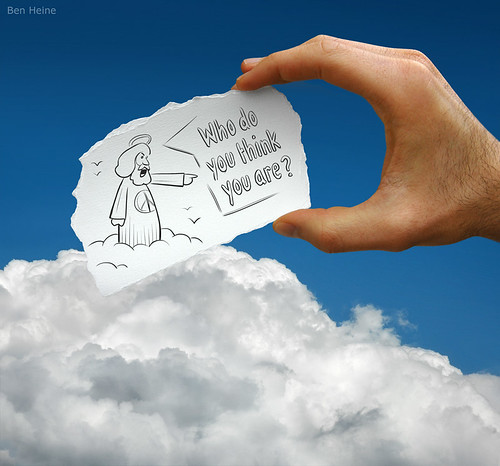
Bless our Lord! I took this photo from a plane and also made the rough sketch. I had tons of ideas for the sentence on the paper, it was really difficult to make a choice. I still wonder... who are we? What's the real purpose of our existence? Love and happiness are the 2 main words that come to my mind. But after?

The Childhood He Has
Never Known
.
.
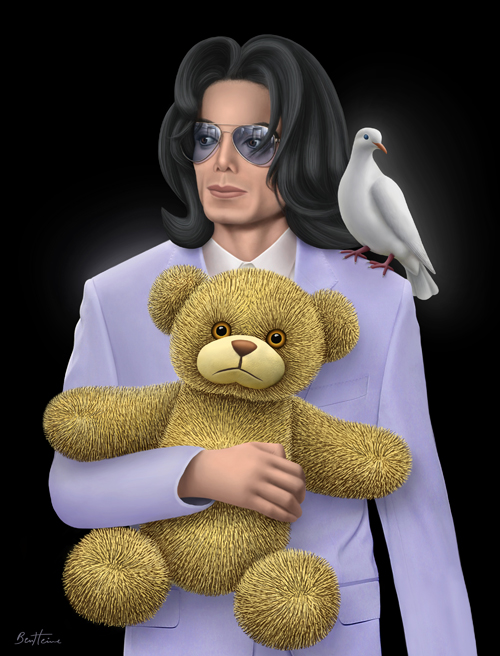
Childhood
By Michael Jackson
Have you seen my childhood?
I’m searching for the world that I come from
’cause I’ve been looking around
In the lost and found of my heart...
No one understands me
They view it as such strange eccentricities...
’cause I keep kidding around
Like a child, but pardon me...
People say I’m not okay
’cause I love such elementary things...
It’s been my fate to compensate,
For the childhood
I’ve never known...
Have you seen my childhood?
I’m searching for that wonder in my youth
Like pirates in adventurous dreams,
Of conquest and kings on the throne...
Before you judge me, try hard to love me,
Look within your heart then ask,
Have you seen my childhood?
People say I’m strange that way
’cause I love such elementary things,
It’s been my fate to compensate,
For the childhood I’ve never known...
Have you seen my childhood?
I’m searching for that wonder in my youth
Like fantastical stories to share
The dreams I would dare, watch me fly...
Before you judge me, try hard to love me.
The painful youth I’ve had
Have you seen my childhood...
By Michael Jackson
Have you seen my childhood?
I’m searching for the world that I come from
’cause I’ve been looking around
In the lost and found of my heart...
No one understands me
They view it as such strange eccentricities...
’cause I keep kidding around
Like a child, but pardon me...
People say I’m not okay
’cause I love such elementary things...
It’s been my fate to compensate,
For the childhood
I’ve never known...
Have you seen my childhood?
I’m searching for that wonder in my youth
Like pirates in adventurous dreams,
Of conquest and kings on the throne...
Before you judge me, try hard to love me,
Look within your heart then ask,
Have you seen my childhood?
People say I’m strange that way
’cause I love such elementary things,
It’s been my fate to compensate,
For the childhood I’ve never known...
Have you seen my childhood?
I’m searching for that wonder in my youth
Like fantastical stories to share
The dreams I would dare, watch me fly...
Before you judge me, try hard to love me.
The painful youth I’ve had
Have you seen my childhood...
.

 Detail
.

Detail
.
Please, don't miss
my other M J portraits:
.
M J - Heal the world
M J - INVINCIBLE
M J - Text Portrait
.
.
Please, don't miss
my other M J portraits:
.
M J - Heal the world
M J - INVINCIBLE
M J - Text Portrait
.
I N V I N C I B L E
.

© 2009 - Ben Heine
.
One of my portraits of the King... RIP
.
We Had Him
By Maya Angelou (*)
Beloveds, now we know that we know nothing, now that our bright and shining star can slip away from our fingertips like a puff of summer wind.
Without notice, our dear love can escape our doting embrace. Sing our songs among the stars and walk our dances across the face of the moon.
In the instant that Michael is gone, we know nothing. No clocks can tell time. No oceans can rush our tides with the abrupt absence of our treasure.
Though we are many, each of us is achingly alone, piercingly alone.
Only when we confess our confusion can we remember that he was a gift to us and we did have him.
He came to us from the creator, trailing creativity in abundance.
Despite the anguish, his life was sheathed in mother love, family love, and survived and did more than that.
He thrived with passion and compassion, humor and style. We had him whether we know who he was or did not know, he was ours and we were his.
We had him, beautiful, delighting our eyes.
His hat, aslant over his brow, and took a pose on his toes for all of us.
And we laughed and stomped our feet for him.
We were enchanted with his passion because he held nothing. He gave us all he had been given.
Today in Tokyo, beneath the Eiffel Tower, in Ghana's Black Star Square.
In Johannesburg and Pittsburgh, in Birmingham, Alabama, and Birmingham, England
We are missing Michael.
But we do know we had him, and we are the world.
Without notice, our dear love can escape our doting embrace. Sing our songs among the stars and walk our dances across the face of the moon.
In the instant that Michael is gone, we know nothing. No clocks can tell time. No oceans can rush our tides with the abrupt absence of our treasure.
Though we are many, each of us is achingly alone, piercingly alone.
Only when we confess our confusion can we remember that he was a gift to us and we did have him.
He came to us from the creator, trailing creativity in abundance.
Despite the anguish, his life was sheathed in mother love, family love, and survived and did more than that.
He thrived with passion and compassion, humor and style. We had him whether we know who he was or did not know, he was ours and we were his.
We had him, beautiful, delighting our eyes.
His hat, aslant over his brow, and took a pose on his toes for all of us.
And we laughed and stomped our feet for him.
We were enchanted with his passion because he held nothing. He gave us all he had been given.
Today in Tokyo, beneath the Eiffel Tower, in Ghana's Black Star Square.
In Johannesburg and Pittsburgh, in Birmingham, Alabama, and Birmingham, England
We are missing Michael.
But we do know we had him, and we are the world.
---------------
(*) Dr. Maya Angelou is an American poet born in 1928. She is known as one of the great voices of contemporary literature. As a poet, educator, historian, best-selling author, actress, playwright, civil-rights activist, producer and director, she continues to travel the world, spreading her wisdom. Within the rhythm of her poetry and elegance of her prose lies Angelou's power to help readers of every orientation span the lines of race.
The above poem was written by Maya Angelou for Michael Jackson's public memorial at the Staples Center in Los Angeles. It was read by Queen Latifah, one of the many celebrities that paid tribute to the King of Pop. (Source)
.The above poem was written by Maya Angelou for Michael Jackson's public memorial at the Staples Center in Los Angeles. It was read by Queen Latifah, one of the many celebrities that paid tribute to the King of Pop. (Source)
 .
. .
. Details
.
- Michael Jackson -
Heal the world
.

© 2009 - Ben Heine
.
One of my portraits of the King... RIP
.
Heal The World
By Michael Jackson
There's A Place In
Your Heart
And I Know That It Is Love
And This Place Could Be Much
Brighter Than Tomorrow
And If You Really Try
You'll Find There's No Need
To Cry
In This Place You'll Feel
That There's No Hurt Or Sorrow
There Are Ways
To Get There
If You Care Enough
For The Living
Make A Little Space
Make A Better Place...
Heal The World
Make It A Better Place
For You And For Me
And The Entire Human Race
There Are People Dying
If You Care Enough
For The Living
Make A Better Place
For You And For Me
.
Read the full lyrics
.
Watch the clip on You Tube
.
Michael Jackson
Text Portrait
.
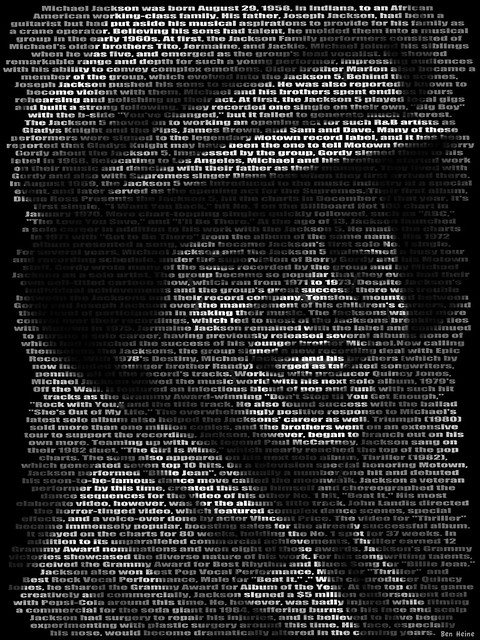
© 2009 - Ben Heine
.
One of my portraits of the King.
I made this with text only...
.
Troubled Musical Genius
By BBC News
.
© 2009 - Ben Heine
.
One of my portraits of the King.
I made this with text only...
.
Troubled Musical Genius
By BBC News
Michael Jackson's unique blend of soul, funk and rock made him the biggest pop act in the world.
Beyond this, his business acumen and intuitive understanding of the music market allowed him to showcase his remarkable talents.
Michael Jackson sold records by the million - and broke records too.
With the soulful vocal presence of Marvin Gaye and Stevie Wonder and the dance moves of James Brown, Jackson's appeal crossed both national and racial boundaries.
His first break came in 1968, when the Jackson Five signed to the Motown label, and he was just 11 when the group released its first single.
Hits like I Want You Back, ABC, The Love You Save, and I'll Be There, which all went to number one in the United States in 1970, made the Jackson Five the first group in pop history to have their first four singles top the charts.
Before long, the youngest member of the Jackson Five was beginning to outstrip his brothers.
A series of solo hits, including Got To Be There, Rockin' Robin and Ben - the maudlin, yet chart-topping, paean to a rat - had shown that the promise of early years had come to fruition.
By the mid-1970s, both Michael's, and his brothers', careers were beginning to stall. Motown has ended its interest in the group, which had re-signed - as the Jacksons - to the Epic label.
But it was while Michael was working on the film musical The Wiz, an all-black retelling of the Wizard of Oz - in which he played the Scarecrow to Diana Ross's Dorothy - that he met the man who would turn him into a superstar and transform the world of popular music.
Music producer, composer and arranger, Quincy Jones, who could already boast a formidable track record, having created hits for artists like Frank Sinatra, Aretha Franklin and George Benson, took Jackson's raw talent and moulded it into an awesome new sound.
>>> Read the full article
.
 Michael Jackson, Text Portrait, detail
.
Beyond this, his business acumen and intuitive understanding of the music market allowed him to showcase his remarkable talents.
Michael Jackson sold records by the million - and broke records too.
With the soulful vocal presence of Marvin Gaye and Stevie Wonder and the dance moves of James Brown, Jackson's appeal crossed both national and racial boundaries.
His first break came in 1968, when the Jackson Five signed to the Motown label, and he was just 11 when the group released its first single.
Hits like I Want You Back, ABC, The Love You Save, and I'll Be There, which all went to number one in the United States in 1970, made the Jackson Five the first group in pop history to have their first four singles top the charts.
Before long, the youngest member of the Jackson Five was beginning to outstrip his brothers.
A series of solo hits, including Got To Be There, Rockin' Robin and Ben - the maudlin, yet chart-topping, paean to a rat - had shown that the promise of early years had come to fruition.
By the mid-1970s, both Michael's, and his brothers', careers were beginning to stall. Motown has ended its interest in the group, which had re-signed - as the Jacksons - to the Epic label.
But it was while Michael was working on the film musical The Wiz, an all-black retelling of the Wizard of Oz - in which he played the Scarecrow to Diana Ross's Dorothy - that he met the man who would turn him into a superstar and transform the world of popular music.
Music producer, composer and arranger, Quincy Jones, who could already boast a formidable track record, having created hits for artists like Frank Sinatra, Aretha Franklin and George Benson, took Jackson's raw talent and moulded it into an awesome new sound.
>>> Read the full article
.
 Michael Jackson, Text Portrait, detail

.
French Singer Henri Salvador Dies
Henri Salvador, the French musician and singer credited with helping inspire both the bossa nova and the music video, has died in Paris aged 90.
Renowned for his booming laugh, elegant crooning and durability, he had planned to record a new album in 2008 and last performed on stage in December.
At the time, he said he was "the only one who can bow out while still alive". In a statement, French President Nicolas Sarkozy said Salvador's death was a cause of "infinite sadness".
"For more than a half-century, with humour and elegance, Henri was the incarnation of the art of song 'a la Francaise,'" he added.
Influence
A legend in his native France, Salvador was also a star in Latin America - particularly in Brazil.
His 1957 song Dans Mon Ile was thought to have inspired Brazilian jazz musician Antonio Carlos Jobim to conceive bossa nova's distinctive rhythm. "When I recorded that little tune, holed up in my apartment in Paris, I could never have imagined it would change musical history," said Salvador said.
And he was among the first performers to set his songs to televised images, prompting some in France to call him the father of the music video.
(Source : BBC News)
---------------
OBITUARY :
French singer of novelty records, jazz and early rock
Henri Salvador, who died on 13 February, 2008, aged 90, was a versatile French singer, most famous for eccentric and silly songs that became popular on French television and the Scopitone video jukeboxes of 1960s Europe.
For songs such as Le Blues du Dentiste (Dentist Blues), Mais Non, Mais Non (But No, But No), Minnie Petite Souris (Little Mouse) and Juanita Banana (Miss Banana), he would film early precursors to the music video, often dressed in ludicrous costumes and pulling silly faces.
Despite this, he was originally a jazz musician and had also played on early French rock ’n’ roll records. As well as his novelty songs, he recorded love songs and ballads and turned his velvety voice to many forms of music during his 70-year career.
Henri Gabriel Salvador was born on 18 July, 1917, in Cayenne, the capital of French Guyana. His family moved to France when he was seven and a few years later he discovered the music of Duke Ellington and Louis Armstrong.
From that moment on he was determined to be a jazz musician, taking up the guitar and learning to play along with Django Reinhardt records. At 16 he began performing in Parisian cabaret clubs, gaining plaudits for his playing and for his comic approach.
In 1935, his hero Django Reinhardt hired him as an accompanist and he also began working for American jazz violinist Eddy South. The Second World War interrupted his jazz career for several years until he was demobbed in 1941.
In occupied France he joined Bernard Hilda's jazz orchestra in Cannes before Ray Ventura spotted his talents as a novelty musician. They went on an English-language revue tour in South America where they entertained American GIs. On returning to France, M Salvador decided to branch out with his own show.
By 1949 he was playing at the most prestigious venues in Paris and won the Grand Prix du Disque for his record Le Loup, La Biche et Le Chevalier (The Wolf, the Deer and The Knight). During the 1950s he played to packed auditoriums in France and was interviewed by Ed Sullivan in America.
Towards the end of the decade he began to experiment with blues, rock and even Caribbean styles. But in 1959, Boris Vian, his songwriting partner on more than 400 compositions (including Rock and Roll-Mops, the first French rock ’n’ roll record), died from a sudden heart attack.
At the start of the ‘60s he concentrated on television presenting in France and Italy, but also founded his own record label. His releases during this decade were his biggest hits. They included Zorro Est Arrivé (Zorro Has Arrived), Syracuse, Le Travail c'est la Santé (Work is Health) and were generally accompanied by a video of M Salvador acting out various comic roles against a gaudy studio backdrop.
During the following decades he continued to release new material and present on television, where he was renowned for his sharp wit and rich laugh. He was also backed by the Walt Disney Corporation and recorded several numbers inspired by their feature films, taking advantage of his popularity with children.
During his later career he returned to his first love, jazz, giving recitals in Europe, North and South America. He was particularly popular among French-speaking communities in Canada and was also awarded the ‘Order of Cultural Merit’ by Brazil’s culture minister.
In 2006, aged 89, he finally retired after the release of his final album, Révérence (Bowing Out). He died of a ruptured aneurysm at his home in Paris. He had been married four times and had one son.
(Source : Lastingtribute.co.uk)
.

.


.
God, Man and Woman
.
By Firoze Shakir
.
In the cradle like womb
lies birthright of a
baby...
the father of man
in full bloom...
humble beginnings
live let live
go back
as food
for worm like thoughts
in an unmarked tomb.
God the Dress maker
Man in a Woman’s Costume.
Woman undressed
Mans Everlasting Doom.
Dark shadows on his
Ancestral awakening loom
A dead corpse to exhume
The world a mortuary
A tenanted room
(Poem's source : firozeshakir.blogspot.com)
.
--------------
.
The poem and photo appeared on hubzay.deviantart.com
God, Man and Woman
.
By Firoze Shakir
.
In the cradle like womb
lies birthright of a
baby...
the father of man
in full bloom...
humble beginnings
live let live
go back
as food
for worm like thoughts
in an unmarked tomb.
God the Dress maker
Man in a Woman’s Costume.
Woman undressed
Mans Everlasting Doom.
Dark shadows on his
Ancestral awakening loom
A dead corpse to exhume
The world a mortuary
A tenanted room
(Poem's source : firozeshakir.blogspot.com)
.
--------------
.
The poem and photo appeared on hubzay.deviantart.com
.
Cigaret Kills
.
.

.
The War on Cigarettes
.
The War on Cigarettes
.
By Olivia Rose-Innes
.
Alcohol, tooth-rotting fizzy drinks, lardburgers, fast cars – the world is full of fun stuff that isn’t very good for us. So is it fair to single out cigarettes for demonisation?Patricia Lambert, Director of the Campaign for Tobacco-Free Kids, certainly believes so. At first glance, Lambert appears no more formidable than a nice lady on the PTA, but when she speaks on tobacco control, a steely quality enters her well-modulated voice.
Advertisement
It is because of her considerable resolve, said Yussuf Saloojee, Executive Director of the National Council Against Smoking, introducing Lambert at the recent 38th Union World Conference on Lung Health in Cape Town, that a journalist was once inspired to refer to her as a “neo-Nazi nanny”.
Are stalwarts of the anti-tobacco lobby indeed shrill lifestyle fascists wasting their energies on an irrelevant cause, or are they correct to target smoking as one of the most crucial public health issues of our time? Some of Lambert's highly convincing arguments follow here.
A smokeless planet?
Lambert was at the conference to speak on the World Health Organisation’s Framework Convention on Tobacco Control (FCTC), the first co-ordinated global effort to reduce tobacco use, and the world’s first public health treaty.
And nothing less than a full-scale planetary effort will do, says Lambert, who has been instrumental in developing the FCTC since it was first proposed, “Because the transnational tobacco industries have no use for national borders. They will sell their product to satisfy their shareholders any where they can and any how they can.”
The objective of the FCTC is “to protect present and future generations from the devastating health, social, environmental and economic consequences of tobacco consumption and exposure to tobacco smoke”, and here Lambert likes to draw everyone’s attention to the word “devastating”.
“ People who draft international treaties aren’t given to flowery language; these documents are, as a rule, on the dry side. But we needed expressive language to stress the impact of tobacco on the world.
Devastating: that word was selected to be deliberately strong by the 190 countries who negotiated the convention, because that was how we saw it.”
It’s just not normal
Two oft-repeated arguments by the anti-tobacco lobby as to why tobacco deserves special demon status:
1. A cigarette is the only legally available consumer product that kills through normal use.
2. There is no safe level of exposure to tobacco smoke.
Says Lambert: “Just in case we forget: this isn’t a normal, ordinary consumer product. It kills 50% of the people who use it. With each breath, a smoker takes in 4000 chemicals, 50 of which are known carcinogens.
"When posed the question: ‘If a cigarette were invented today, would any regulatory authority on earth licence it for human consumption?’ I’ve never had any such authority give an answer that wasn’t a flat 'No'.”
Unequivocal health message
The medical community changes its mind frequently – as a result of the nature of scientific research, which, when progressing as it should, constantly checks and modifies itself as new evidence from studies arises.
But there are some areas in medicine where the evidence is so overwhelming that the public health message has remained the same for years now, as in: Eat your Greens, Keep Moving, oh, and – Rather Don’t Smoke.
In the same way that the evidence on the health effects of smoking began to mount mid-20th century and increasingly stilled dissenting voices, the research on the negative impact of passive smoking is now steadily convincing the doubters.
What tobacco costs the world
Lost lives: Currently, close on 5 million people die each year as a result of smoking. By 2030, that figure will have doubled: 10 million deaths. Of these, 70% will occur in developing countries.
“This staggering projected increase in death and disease in developing countries, compared to the relatively small increase in developed countries, is another indication that international control is really the only way to go,” says Lambert.
“There has been a tendency in Africa – and I’m sure in other developing countries – to say that tobacco control is something that rich countries should be doing. But if the burden of disease is coming our way, as developing countries the only prudent and responsible thing we can do is make sure that we initiate and maintain the strongest tobacco control measures possible.”
Poverty:“Tobacco control, rather than being a luxury that only rich nations can afford, is now a necessity that all countries must address.” - WHO report: Tobacco and Poverty: A Vicious Cycle, 2004.
Tobacco consumption is highest among the poor, who spend a larger proportion of their income on tobacco. It further exacerbates poverty due to healthcare costs, illness and premature death.
The costs to government and society are also severe: “The tobacco industry always tells us they bring in huge amounts of tax – they don’t; they only collect it,” says Lambert. “The World Bank estimates that the economic cost of tobacco use is more than 11 times greater than the economic benefits.”
Annual tobacco-attributable health care costs are estimated at between 6% and 15% of total health care costs.
In addition, productivity is greatly decreased by illness and premature death. If current trends persist, about 500 million people alive today will eventually be killed by tobacco, and half will die in their productive middle years. Most smokers lose 20 to 25 years of life.
Environmental damage:Tobacco production causes considerable environmental damage in terms of deforestation and carbon emissions – especially, as Lambert points out, in countries in Africa where tobacco is cured by burning wood.
Towards 100% smoke-free
To date, 151 countries – including South Africa – have acceded to or ratified the FTCT. Its key elements include:
* Raising taxes and prices of tobacco products
* Banning tobacco advertising, promotion and sponsorship
* Changing the packaging and labelling to depict health risks
* Protection from exposure to tobacco smoke
The ultimate aim of these measures is 100% smoke-free, i.e. no smoking in all work and public environments.
----------------------
--> The article appeared on health24.com
.
.

Marcel Marceau
Remembered
Remembered
.

Tu Vas Nous Manquer,
an Ode to Marcel Marceau
.
By thepoetryman
As in silent motion
white faced petals
polish our living
nestled near, ready to rise
and outshine the sorrow
etched upon our face;
hate, that rusty nail
on the floor of hell piercing
the naked feet of our foul specter.
As in silent motion
dream’s painted face
fetches our melody…
Je dois y aller maintenant.
Adieu,
© 2007 mrp/thepoetryman
.
* * *
.
Mime Legend Marcel Marceau
passed away at 84
an Ode to Marcel Marceau
.
By thepoetryman
As in silent motion
white faced petals
polish our living
nestled near, ready to rise
and outshine the sorrow
etched upon our face;
hate, that rusty nail
on the floor of hell piercing
the naked feet of our foul specter.
As in silent motion
dream’s painted face
fetches our melody…
Je dois y aller maintenant.
Adieu,
© 2007 mrp/thepoetryman
.
* * *
.
Mime Legend Marcel Marceau
passed away at 84
.
Marcel Marceau, the master of mime who transformed silence into poetry with lithe gestures and pliant facial expressions that spoke to generations of young and old, has died. He was 84.Wearing white face paint, soft shoes and a battered hat topped with a red flower, Marceau breathed new life into an art that dates to ancient Greece. He played out the human comedy through his alter-ego Bip without ever uttering a word.
Offstage, he was famously chatty. "Never get a mime talking. He won't stop," he once said.
A French Jew, Marceau escaped deportation to a Nazi death camp during World War II, unlike his father who died in Auschwitz. Marceau worked with the French Resistance to protect Jewish children, and later used the memories of his own life to feed his art.
He gave life to a wide spectrum of characters, from a peevish waiter to a lion tamer to an old woman knitting, and to the best-known Bip.
.
* * *
.
Marcel Marceau Remembered
.
Marcel Marceau, the legendary master of mime, died September 22 at age 84. Born Marcel Mangel to a Jewish family in Strasbourg , France Paris
.
.
I was once asked about my “Jewish sensitivity,” to which I replied that I would prefer to discuss human sensitivity. Jews are sensitive, like other people, but in the modern world religion should not be so high up [in] the order of the day. I was brought up in a Jewish home, but I was brought up to be human, not fanatical, which is something that I don’t appreciate at all. I learned to become a humanist, and not to dwell on the differences between Jews and Christians.
I must be honest and tell you that I do feel slightly uncomfortable with people dwelling on this Jewish aspect of my life. I have the greatest respect for the sufferance of the Holocaust — my father died in Auschwitz — so I am perfectly well aware of what happened. But this did not make me superior to other people.
I don’t want to be part of a community. I want to be part of the world. I have never been a victim of antisemitism — if you put to one side my war-time experience. That said, I am lucky not to have been sent into a concentration camp. I produced false papers, I took Jewish children to Switzerland
The memory of the Holocaust is so important though. The 20th century was the most criminal century. Despite this, it has been a great century too. There is a balance between good and evil. But I am happy that the memory of the Holocaust is kept alive, so that such a tragedy can never begin again. But I would not put a Jew who died in the Holocaust above a Catholic soldier who died in the trenches of the First World War. All wars are criminal.
.
* * *
.
.
Silence falls on Marcel Marceau,
master of the mime
.
By John Lichfield
master of the mime
.
By John Lichfield
When great actors die, they are said to "fall silent". The mime artist Marcel Marceau had been delighting the world in silence for 60 years.
In Paris on Saturday, he, and his restless alter-ego "Bip", fell still. He was 84. Marceau was perhaps the most loved and internationally admired of all French people. "Bip" – a pale, elastic-limbed clown with a striped shirt and limp red flower in his battered hat – was instantly recognisable from the United States to China.
"Bip" was inspired by the work of Charlie Chaplin, Harpo Marx and other early film stars. He also drew on – and revived – older, European traditions of silent theatre, such as the Italian Commedia dell'arte.
Marceau once suggested another, darker, reason for his wordless art. He was born into a French Jewish family in 1923. His father, Charles Mangel, a butcher, was deported from France in 1944 and died in Auschwitz concentration camp.
"The people who came back from the camps were never able to talk about it," he once said. "My name is Mangel. I am Jewish. Perhaps that, unconsciously, contributed towards my choice of silence."
The French Prime Minister, François Fillon, said yesterday: "A talent for telling stories without words conferred on Marcel Marceau a rare gift: the ability to speak to everyone, with no barriers of language or culture." The Culture Minister, Christine Albanel, said Marceau's "poetry and tenderness" had inspired performers in other theatrical disciplines for more than half a century.
Marceau claimed that mime was able to convey a more profound, or at least more universal, message than words. "Pantomime is a hypnotic art," he said. "It is a universal language". Marcel Marceau was born in Strasbourg on 22 March 1923. He fled the Nazi invasion of Alsace with his family in 1940 and eventually joined a resistance movement near Limoges.
After the war, he joined Charles Dullin's School of Dramatic Art, and studied under the celebrated mime artist Etienne Decroux. Marceau first made his name with his own company in a tiny theatre on the Paris Left Bank – the Théatre de Poche, where "Bip" was born 60 years ago this year.
A tour of the United States in the mid-1950s – the first of many – turned him into an international celebrity. In 1967, he bumped into his boyhood hero, Charlie Chaplin, at Orly airport in Paris. He launched immediately into a pastiche of Chaplin's dance routine with a cane and then burst into tears and threw his arms around the ageing star.
One of Marceau's most loved sketches was "Public Garden," where "Bip" became in turn all the characters in a park, from a small boy playing football, to the park warden to an old lady knitting. At other times, he might be a bad-tempered waiter, an incompetent lion-tamer, a man chasing butterflies or a flirt at a cocktail party. In one of his later routines – he was making 250 appearance a year until the late 1990s – he mimed all the ages of mankind, from youth to death, in a couple of minutes.
Although Marceau never spoke on stage, he did once famously speak in a film. He appeared in Mel Brooks' Silent Movie in 1976 and said the only word: "non". Off stage, like one of his heroes, Harpo Marx, he was a very talkative man. "Never get a mime talking," he once said. "He won't stop." Marcel Marceau was a modest man, except when describing his own achievements. "I have a feeling that I did for mime what Segovia did for the guitar, what Casals did for the cello," he once said.
In the 1950s and 1960s, his company was the only troupe of mime artists in the world. He founded the Ecole Internationale de Mimodrame in Paris in 1978, which is still the only school of its kind. The pop star Michael Jackson based his moonwalk routine on Marceau's sketch of a man walking against the wind.
Marceau is survived by his four children.
In Paris on Saturday, he, and his restless alter-ego "Bip", fell still. He was 84. Marceau was perhaps the most loved and internationally admired of all French people. "Bip" – a pale, elastic-limbed clown with a striped shirt and limp red flower in his battered hat – was instantly recognisable from the United States to China.
"Bip" was inspired by the work of Charlie Chaplin, Harpo Marx and other early film stars. He also drew on – and revived – older, European traditions of silent theatre, such as the Italian Commedia dell'arte.
Marceau once suggested another, darker, reason for his wordless art. He was born into a French Jewish family in 1923. His father, Charles Mangel, a butcher, was deported from France in 1944 and died in Auschwitz concentration camp.
"The people who came back from the camps were never able to talk about it," he once said. "My name is Mangel. I am Jewish. Perhaps that, unconsciously, contributed towards my choice of silence."
The French Prime Minister, François Fillon, said yesterday: "A talent for telling stories without words conferred on Marcel Marceau a rare gift: the ability to speak to everyone, with no barriers of language or culture." The Culture Minister, Christine Albanel, said Marceau's "poetry and tenderness" had inspired performers in other theatrical disciplines for more than half a century.
Marceau claimed that mime was able to convey a more profound, or at least more universal, message than words. "Pantomime is a hypnotic art," he said. "It is a universal language". Marcel Marceau was born in Strasbourg on 22 March 1923. He fled the Nazi invasion of Alsace with his family in 1940 and eventually joined a resistance movement near Limoges.
After the war, he joined Charles Dullin's School of Dramatic Art, and studied under the celebrated mime artist Etienne Decroux. Marceau first made his name with his own company in a tiny theatre on the Paris Left Bank – the Théatre de Poche, where "Bip" was born 60 years ago this year.
A tour of the United States in the mid-1950s – the first of many – turned him into an international celebrity. In 1967, he bumped into his boyhood hero, Charlie Chaplin, at Orly airport in Paris. He launched immediately into a pastiche of Chaplin's dance routine with a cane and then burst into tears and threw his arms around the ageing star.
One of Marceau's most loved sketches was "Public Garden," where "Bip" became in turn all the characters in a park, from a small boy playing football, to the park warden to an old lady knitting. At other times, he might be a bad-tempered waiter, an incompetent lion-tamer, a man chasing butterflies or a flirt at a cocktail party. In one of his later routines – he was making 250 appearance a year until the late 1990s – he mimed all the ages of mankind, from youth to death, in a couple of minutes.
Although Marceau never spoke on stage, he did once famously speak in a film. He appeared in Mel Brooks' Silent Movie in 1976 and said the only word: "non". Off stage, like one of his heroes, Harpo Marx, he was a very talkative man. "Never get a mime talking," he once said. "He won't stop." Marcel Marceau was a modest man, except when describing his own achievements. "I have a feeling that I did for mime what Segovia did for the guitar, what Casals did for the cello," he once said.
In the 1950s and 1960s, his company was the only troupe of mime artists in the world. He founded the Ecole Internationale de Mimodrame in Paris in 1978, which is still the only school of its kind. The pop star Michael Jackson based his moonwalk routine on Marceau's sketch of a man walking against the wind.
Marceau is survived by his four children.
.
* * *
.
.
Obituary
Marcel Marceau,
Mime artist and teacher
Marcel Marceau,
Mime artist and teacher
Marcel Mangel (Marcel Marceau), mime: born Strasbourg, France 22 March 1923; Director, Compagnie de Mime Marcel Marceau 1949-64; Director, Ecole Internationale de Mimodrame de Paris Marcel Marceau 1978-2005; three times married (two sons, two daughters); died Paris 22 September 2007.
Wearing white trousers, a crumpled top hat adorned with a bedraggled red artificial flower and a striped vest with big buttons, and with a mask of a face that was able to suggest a thousand different impressions, the celebrated mime Marcel Marceau produced an astonishing variety of brief dramatic scenes and comical encounters with himself – The Cage, Walking Against the Wind, The Maskmaker, The Park, among others – and a gallery of unforgettable characters – head waiters, mad sculptors, matadors, dictators and ballet dancers. Of Marceau's moving depiction of the four ages of man, Youth, Maturity, Old Age and Death, one critic said, "He accomplishes in less than two minutes what most novelists cannot do in volumes."
He was born Marcel Mangel, the son of a butcher, in Strasbourg in 1923. He attended schools in Strasbourg and Lille and even as a child was a gifted mimic of animals and human beings. He enjoyed the silent movies of the 1920s, in which his favourite stars were Buster Keaton, Harry Langdon, Stan Laurel and above all Charlie Chaplin ("To us, he was a god"), whom he was to meet later in life. Their films were silent, so they had to express their feelings through mime.
When Marcel was 16, the Second World War began and in September 1939, Strasbourg had to be evacuated. For a while he took courses in painting and enamelling at the Ecole des Arts Décoratifs in Limoges, and he was to become a gifted illustrator of his own works. His father was deported to Auschwitz, where he later died, and Marcel joined the Resistance, moving to Paris. On one occasion, in 1944, as he was coming out of the Métro, he was stopped by two plain-clothes policemen who asked to see his papers. They were perfect fakes, for Marcel Mangel, as both a Resistance spy and a Jew, was on the wanted list. The narks kept examining his papers and looking at his face, while he stared back at them without batting an eyelid, showing no trace of fear. The men were baffled, and let him go. It was an early demonstration of the powers of mime.
In 1945, he began attending Charles Dullin's famous school of dramatic art in the Théâtre Sarah Bernhardt, where he also followed classes given by Etienne Decroux, who had invented the system of "mime corporel" – corporeal mime. It became the basis for Mangel's own art of facial and bodily control. One of his fellow students was Jean-Louis Barrault, who appreciated his exceptional talents as both actor and mime. Mangel became a member of Barrault's own company and was cast in the role of Arlequin in the "mimodrama" Baptiste, a role Barrault had made famous in the 1945 film Les Enfants du Paradis.
Mangel was such a success that Barrault encouraged him to present his own mimodrama, "Praxiteles and the Golden Fish" (1946), at the Théâtre Sarah Bernhardt. Its popularity made Mangel decide to embark upon the career of a mime. The stage name he chose was Marcel Marceau, taken from a line in a poem by Victor Hugo about a great general, Marceau-Desgraviers. But the character he created was "Bip".
Marceau borrowed Bip's name from the character of Pip in Charles Dickens's Great Expectations and indeed Bip resembled the wan-faced waifs of Dotheboys Hall in Nicholas Nickleby. He had the woebegone orphan look of children in early silent movies, like Jackie Coogan in The Kid or Oliver Twist.
"Born in the imagination of my childhood," Marceau once wrote of his greatest success, "Bip is a romantic and burlesque hero of our time. His gaze is turned not only towards heaven, but into the hearts of men."
Marceau's scenarios for his sketches were minimal, given body by his weird physical agility and an acute sense of "scenic time". In 1949 he started his own mime company at the tiny Théâtre de Poche in Montparnasse. Its first performance, in 1951, was a mime drama based on Gogol's tale The Overcoat. It was such a popular success that Marceau enlarged the company and produced classic period mime dramas including Pierrot de Montmartre (1952) and the more ambitious Le Mont de Piété ("The Pawn Shop", 1956).
But unlike the "straight" theatre, mime in France has never enjoyed official financial sponsorship, so Marceau had on occasion to abandon his company and start to make a living on tour as Bip in celebrated solo turns.
He toured Europe for eight years. His big break in America came in 1955-56 and Marcel Marceau and mime became inextricably linked in the public mind across the world.
"Americans are like big children – they never lose their sense of amazement and wonder," he once said of his transatlantic fans. "I show them something they have never seen before."
Marceau's beautiful Bip Hunts Butterflies had obviously influenced the great ballet dancer Jean Babilée when in the 1950s I saw him dancing in London in the ballet Le Papillon. Bip toured the whole world, to universal acclaim. He enchanted the Japanese, who after the war were still trying to learn foreign languages. They adored Bip because he was able to express every human feeling without words, and when I arrived in Japan in 1959 the Japanese were still under his spell.
By the end of his life, by Marceau's reckoning he had toured in 65 countries. He gave a rare touch of originality to television shows and appeared in several films, including the cult sci-fi adventure Barbarella (1968), starring Jane Fonda (with Marceau in the role of Professor Ping) and Mel Brooks's Silent Movie (1976), in which Marceau spoke the only line (in fact the only audible word), "Non!"
The list of Marceau's prizes and academic honours is enormous. He was an Officier de la Légion d'honneur, Grand Officier de l'Ordre nationale du Mérite, Commandeur des Arts et des Lettres de la Republique Française, and received honorary doctorates from American universities including Princeton, Michigan and Columbia. Bip received a "Molière d'honneur" in Paris in 1999. And the city of Paris finally endowed the art of mime and Marcel Marceau with enough money to run a permanent school there.
Wearing white trousers, a crumpled top hat adorned with a bedraggled red artificial flower and a striped vest with big buttons, and with a mask of a face that was able to suggest a thousand different impressions, the celebrated mime Marcel Marceau produced an astonishing variety of brief dramatic scenes and comical encounters with himself – The Cage, Walking Against the Wind, The Maskmaker, The Park, among others – and a gallery of unforgettable characters – head waiters, mad sculptors, matadors, dictators and ballet dancers. Of Marceau's moving depiction of the four ages of man, Youth, Maturity, Old Age and Death, one critic said, "He accomplishes in less than two minutes what most novelists cannot do in volumes."
He was born Marcel Mangel, the son of a butcher, in Strasbourg in 1923. He attended schools in Strasbourg and Lille and even as a child was a gifted mimic of animals and human beings. He enjoyed the silent movies of the 1920s, in which his favourite stars were Buster Keaton, Harry Langdon, Stan Laurel and above all Charlie Chaplin ("To us, he was a god"), whom he was to meet later in life. Their films were silent, so they had to express their feelings through mime.
When Marcel was 16, the Second World War began and in September 1939, Strasbourg had to be evacuated. For a while he took courses in painting and enamelling at the Ecole des Arts Décoratifs in Limoges, and he was to become a gifted illustrator of his own works. His father was deported to Auschwitz, where he later died, and Marcel joined the Resistance, moving to Paris. On one occasion, in 1944, as he was coming out of the Métro, he was stopped by two plain-clothes policemen who asked to see his papers. They were perfect fakes, for Marcel Mangel, as both a Resistance spy and a Jew, was on the wanted list. The narks kept examining his papers and looking at his face, while he stared back at them without batting an eyelid, showing no trace of fear. The men were baffled, and let him go. It was an early demonstration of the powers of mime.
In 1945, he began attending Charles Dullin's famous school of dramatic art in the Théâtre Sarah Bernhardt, where he also followed classes given by Etienne Decroux, who had invented the system of "mime corporel" – corporeal mime. It became the basis for Mangel's own art of facial and bodily control. One of his fellow students was Jean-Louis Barrault, who appreciated his exceptional talents as both actor and mime. Mangel became a member of Barrault's own company and was cast in the role of Arlequin in the "mimodrama" Baptiste, a role Barrault had made famous in the 1945 film Les Enfants du Paradis.
Mangel was such a success that Barrault encouraged him to present his own mimodrama, "Praxiteles and the Golden Fish" (1946), at the Théâtre Sarah Bernhardt. Its popularity made Mangel decide to embark upon the career of a mime. The stage name he chose was Marcel Marceau, taken from a line in a poem by Victor Hugo about a great general, Marceau-Desgraviers. But the character he created was "Bip".
Marceau borrowed Bip's name from the character of Pip in Charles Dickens's Great Expectations and indeed Bip resembled the wan-faced waifs of Dotheboys Hall in Nicholas Nickleby. He had the woebegone orphan look of children in early silent movies, like Jackie Coogan in The Kid or Oliver Twist.
"Born in the imagination of my childhood," Marceau once wrote of his greatest success, "Bip is a romantic and burlesque hero of our time. His gaze is turned not only towards heaven, but into the hearts of men."
Marceau's scenarios for his sketches were minimal, given body by his weird physical agility and an acute sense of "scenic time". In 1949 he started his own mime company at the tiny Théâtre de Poche in Montparnasse. Its first performance, in 1951, was a mime drama based on Gogol's tale The Overcoat. It was such a popular success that Marceau enlarged the company and produced classic period mime dramas including Pierrot de Montmartre (1952) and the more ambitious Le Mont de Piété ("The Pawn Shop", 1956).
But unlike the "straight" theatre, mime in France has never enjoyed official financial sponsorship, so Marceau had on occasion to abandon his company and start to make a living on tour as Bip in celebrated solo turns.
He toured Europe for eight years. His big break in America came in 1955-56 and Marcel Marceau and mime became inextricably linked in the public mind across the world.
"Americans are like big children – they never lose their sense of amazement and wonder," he once said of his transatlantic fans. "I show them something they have never seen before."
Marceau's beautiful Bip Hunts Butterflies had obviously influenced the great ballet dancer Jean Babilée when in the 1950s I saw him dancing in London in the ballet Le Papillon. Bip toured the whole world, to universal acclaim. He enchanted the Japanese, who after the war were still trying to learn foreign languages. They adored Bip because he was able to express every human feeling without words, and when I arrived in Japan in 1959 the Japanese were still under his spell.
By the end of his life, by Marceau's reckoning he had toured in 65 countries. He gave a rare touch of originality to television shows and appeared in several films, including the cult sci-fi adventure Barbarella (1968), starring Jane Fonda (with Marceau in the role of Professor Ping) and Mel Brooks's Silent Movie (1976), in which Marceau spoke the only line (in fact the only audible word), "Non!"
The list of Marceau's prizes and academic honours is enormous. He was an Officier de la Légion d'honneur, Grand Officier de l'Ordre nationale du Mérite, Commandeur des Arts et des Lettres de la Republique Française, and received honorary doctorates from American universities including Princeton, Michigan and Columbia. Bip received a "Molière d'honneur" in Paris in 1999. And the city of Paris finally endowed the art of mime and Marcel Marceau with enough money to run a permanent school there.
--------------------
(--> The article and obituary appeared on belfasttelegraph.co.uk)

Suicide exists in all countries of the world and there are records of suicides dating back to the earliest historical records of humankind. In 2000 the World Health Organization estimated that approximately 1 million people commit suicide annually. Suicide is among the top ten causes of death and one of the three leading causes in the fifteen-to-thirty-five-years age group worldwide. In the United States, where suicide is the ninth leading cause of death (and where the number of victims is 50% higher than the number of homicides), the Surgeon General in 1999 issued a Call to Action to Prevent Suicide, labeling suicide "a significant public health problem."
Suicide is a tragic phenomenon that has preoccupied professionals from a variety of disciplines. Deaths by suicide have broad psychological and social impacts on families and societies throughout the world. On average, each suicide intimately affects at least six other people, and if the suicide occurs in the school or workplace it can significantly impact hundreds. Suicide's toll on the living has been estimated by the World Health Organization in terms of disability-adjusted life years, which indicates the number of healthy years of life lost to an illness or event. According to their calculations, the burden of suicide is equal to the burden of all wars and homicides throughout the world. Despite progress in controlling many other causes of death, suicide has been on the rise— becoming one of the leading causes of death.
The taking of one's own life is the result of a complex interaction of psychological, sociological, environmental, genetic, and biological risk factors. Suicide is neither a disease nor the result of a disease or illness, but rather a desperate act by people who feel that ending their life is the only way to stop their interminable and intolerable suffering.
Despite the magnitude of social damage caused by suicide, it is a fairly rare event. Suicide rates of between 15 to 25 deaths per 100,000 population each year may be considered high. Most people who are seriously suicidal, even those who attempt suicide, rarely have a fatal outcome (although, in the United States, 500,000 people annually require emergency room treatment because of their attempts). For each completed suicide (a suicide that results in death) there are at least six or seven suicide attempts that result in hospitalizations and, according to community surveys, for each completed suicide at least 100 people report that they attempted suicide without being hospitalized as a suicide attempter. Furthermore, if one asks in a community survey if people seriously considered suicide, about one person in twenty-five says that they have done so.
Research shows that the vast majority, at least 80 percent, of persons who died by suicide had been or could be diagnosed as suffering from a mental disorder, usually mood disorders and depression. People who suffer from the mental disorders of depression and manic depression, alcoholism, or schizophrenia have between a 4 percent and 15 percent lifetime risk of suicide. These mental disorders do not "cause" suicide, but people with mental disorders are at much greater risk of committing suicide. For this reason, the diagnosis and treatment of mood disorders, alcoholism, and schizophrenia may prevent suicides.
Besides mental disorders, there are numerous other risk factors that help identify who is at greater risk of suicide. The most important risk factor is gender, with men in Europe and the Americas committing suicide about five times more than women even though women are more likely to attempt suicide. People with some physical illnesses have greater suicide risks. In most countries, men over the age of seventy-five have the greatest risk of suicide of all age groups. Those who live alone or are separated are more vulnerable to suicide, including divorced, widowed, and single people. Also at higher risk are individuals who have lost a job.
Various situational factors also increase the risk of suicide. Individuals who are exposed to suicide in real life or through the media have a higher like-lihood of suicidal behavior. Research on firearms and the availability of other means of suicide has shown that if a method is readily available a death by suicide is more likely to occur. For this reason control of firearms and reducing access to other preferred means of suicide, such as putting up barriers on bridges and getting rid of medications in the home of a suicidal adolescent, may help prevent suicides.
The crisis situation in which a person attempts or commits suicide is often precipitated by a stressful life event. Suicides are more likely to occur after an argument with family members or lovers following rejection or separation, financial loss and bereavement, job loss, retirement, or failure at school. Usually these events are "the last straw" for a suicidal person. They are generally not what caused the suicide but what resulted in an increased likelihood that the suicide would occur then.
People who consider suicide generally feel ambivalent about ending their own life. It is this ambivalence that leads desperately suicidal people to talk about their plans as they "cry for help." Telephone help lines, therapists, and friends strengthen the will to live of ambivalent people by helping them explore other options for changing their situation.
The psychoanalyst Edwin Shneidman described the mental state of suicidal individuals experiencing unendurable psychological pain and feelings of frustration. According to Shneidman, suicide is seen as the only solution to their problems, one that results in stopping intolerable feelings. Besides feeling ambivalent, suicide-prone individuals tend to have what he calls "constriction"—rigid and persistent preoccupations with suicide as the solution to their problems. These individuals believe that the drastic option of ending their own life by suicide is the only way out unless others help break this pattern of constricted thought.
Many countries, including the United States, have created national suicide prevention programs that utilize a variety of strategies. These programs involve a variety of actions. Some prevention methods begin very early, teaching young children ages five to seven how to better cope with everyday problems. Other programs focus on teaching high school students how to better recognize signs of suicide in friends and how to obtain help. Actions also focus upon educating "gatekeepers," such as physicians, counselors, and teachers, who may come into contact with suicidal persons. The World Health Organization publishes resources on preventing suicide in its web site (www.who.org), and Befrienders International has extensive information on suicide and its prevention available in several languages at www.befrienders.org.
Bibliography
-Hawton, Keith, and Kees van Heeringen, eds. The International Handbook of Suicide and Attempted Suicide. New York: John Wiley and Sons, 2000.
-Phillips, David P. "The Werther Effect: Suicide and Other Forms of Violence are Contagious." Sciences 25 (1985):32–39.
-Shneidman, Edwin. Suicide As Psychache: A Clinical Approach to Self-Destructive Behavior. Northvale, NJ: Jason Aronson, 1993.
-World Health Organization. World Health Statistics Annual, 1995. Geneva: Author, 1996.
--------------------------
--> This article originally appeared on deathreference.com
.
Subscribe to:
Posts (Atom)