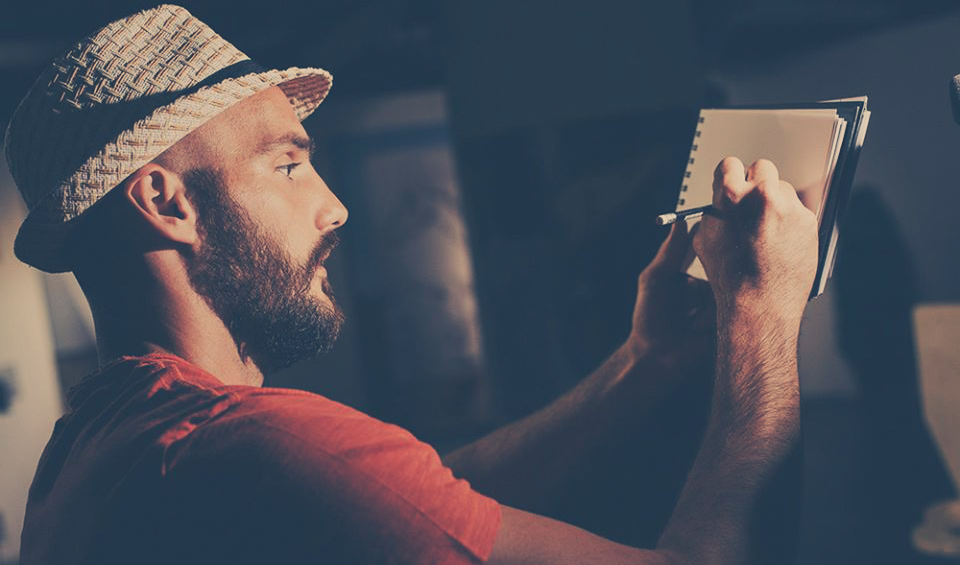
Everything Carries Me To You
.
© 2008 - Ben Heine
.
My Inspiration
.
By Bilal Anaim

You are the goddess
and I'm the clay
You form and mold
day after day

For me you have
within your grasp
Please don't
let me harden.

Not to you my love
but to this world
Softening myself to you
like the true love of the lord

Within you I found an empty place
for my heart to stay alive
A place where I found
my inspiration and drive

(The poem appeared on best-love-poems.com)
.
Peter S Quinn's Poetry
.
.
This Is My Heart

.
This is my heart to the world I carry
And bring every knot to its unleash
To break through the barriers of a worry
And making the peace to mankind with ease
Love song that blows here through the dimly breeze
With every hope that's hard to define
In future's new morning of green leafed trees
That through to the road shall once again shine

The reasons are captiv'd in breaking blow
If love is without its brethren passion
All of its hope shall only be like glow
That proves to be weak and out of fashion
So make harmonious peace that is dearly
And it shall show how big your heart's clearly
.
.
Swing Swing
.
Swing swing on my fortune index finger
Let me be your desiring destiny
Gadgets and opportunities swinger
Every past memories daydreams a b c
Times of wind blowing gathering clouds
And the colorful rainbows from the beyond
Gathering happiness together crowds
Afar oceans and every millpond

Each finger to build on to more treasures
That the air of point might someday fill
To give amount time to mankind's pleasure
When youth and its dreams climb the older hill
Everything from early life floating rays
Those were colors, but now have turned to grays
.
.
Do Not Pull the Trigger
.
Do not pull the trigger
‘Cause I might be much bigger
Than the creation of your thought
That from this gun is brought

My life may be in vain
Because of its struggles and pain
But give me another opportunity
Of what you thought of me

My heart is pulling up hill
In finding the colors to fill
To bring breath its death
And I again down to earth
.
.
Changing Masks
.
Changing masks of myriad subtleties today
In the colorful worlds we all live in
Spiral bounds to its many turning way
Head to head in tomorrow's coming spin
Waves from the sky through emotions of song
To follow your spirits from cloud to cloud
Dreams of your golden thrust spinning headlong
From concrete forests and to the street crowd

Opportunities of living color turn
Jesters of every man's inside juggling
Desiring shades that come to mind and burn
From their work about distances and struggling
Masks like transparent ornamentation
Theater of smiles and sadness sensation
.
All the above poems are by Peter S Quinn
and the illustrations by Ben Heine
.
Fast Caricature
.
A little video of me drawing.
It was recently taken at
a festival in
Sint Niklaas, Belgium
(Video by Paul Bottu)
.

.

Mohammed Khnifer
.

.
Mohammed Khnifer is a Saudi journalist working for Al Eqtisadiah. He recently interviewed me.

About Al Eqtisadiah :

Launched in December of 1992 in Riyadh, Al Eqtisadiah is an Arabic language daily newspaper with an exclusive focus on economic and business news and analysis. The newspaper provides news coverage as well as research, analysis and commentary on domestic, regional and international economic and business-related events. The newspaper complements its coverage of regional business and economic news with translated extracts from major international business publications, including the Financial Times, the Harvard Business Review, INSEAD, and Frankfurter. The newspaper primarily targets professionals, investors, academics, and senior government employees in the Kingdom and the GCC.

Additions are currently being undertaken to the newspaper, widening the geographic coverage to include the GCC, in order to expand the newspaper’s readership base. Being the only Saudi and regional daily newspaper with an exclusive focus on business and economics news and analysis. Al Eqtisadiah is currently the only specialized business and financial newspaper in the Kingdom our parent company Established in 1972, SRPC has become one of the most important publishing groups in the Arab world and it has 14 publications. The Saudi Research & Marketing Group is one of the most important integrated and leading publishing groups in the Middle East because of its huge potentials and prominent role in the aspects of publishing, advertising and printing in Saudi Arabia, thereby having distinguished presence and audience extending over vast areas in a number of continents. The Group’s main activities are centered in Saudi Arabia. It also has publishing, printing and distribution centers in seven major countries. The Group operates through a number of subsidiaries, being a group distinguished for vertical integration of its companies. The Group is actively engaged in four key areas: publishing, advertising, printing and distribution.
What Next ?
.
.
It's A Small World After All
.
By Greg Peel
(FN Arena News)
.
This weekend in Washington saw a meeting of what is known as the "Group of 20" nations - those representing the most powerful economies in the world. It's a little bit of a misnomer, as the G20 is actually 19 nations plus the European Union. The European Union itself consists of 27 nations, although just to confuse the issue there is cross-over.

Meetings of the G20 are not common, and one can imagine that getting 20 countries to agree on something over a weekend is no small task. More common are meetings of the G7 - the most powerful among the powerful. The G7 consists of the United States, Japan, Germany, France, Italy, The United Kingdom and Canada.

To bring that up to the G20, we add Argentina, Australia, Brazil, China, India, Indonesia, Mexico, Russia, Saudi Arabia, South Africa, South Korea and Turkey, and the European Union.

The European Union consists of 27 countries which trade as a bloc, and as a bloc the EU has an economy greater than that of the US. Of the 27 members only 15 have adopted the euro as their currency. Germany, France, Italy and the UK are all members, so by adding the EU to the G19 you add Austria, Belgium, Bulgaria, Cyprus, the Czech Republic, Denmark, Estonia, Finland, Greece, Hungary, Ireland, Latvia, Lithuania, Luxembourg, Malta, the Netherlands, Poland, Portugal, Romania, Slovakia, Slovenia, Spain and Sweden.

In other words, 42 nations were represented in Washington, one way or another, representing about 90% of the world economy.

The reason they were there is because the world's economy is in dire straits. Prior to the meeting we learnt that Europe is the first to officially record a recession - being two consecutive quarters of negative GDP growth. It is actually the 15 members of the euro currency which have collectively fallen into recession, posting negative 0.2% growth in the third quarter following the same result in the second. The full EU also posted a negative 0.2% figure but was on zero in the second quarter. The biggest economy within the EU - Germany - saw a negative 0.2% following a negative 0.4% previously. The second biggest - the UK - saw an ominous 0.5% drop following a zero result previously. Let's not get hung up on the definition - Europe is in recession.

That Europe should be the first major economy to enter recession is illustrative of why the G20 saw urgent cause to meet in Washington on the weekend. For we all know that the real problem is derived in the US - creator of the subprime mortgage, the CDO, the CDS, and forty times leverage for investment banks. But in today's financial world interconnectivity ensures that no significant economy can operate in isolation. The world has weaved a tangled web. No economy can be spared the ramifications of the actions of others.

We all now appreciate the common chaos theory adage that a butterfly flapping its wings in South America can cause a typhoon in Japan (or variations on that theme). If the theory needed any proof then it has come in the knowledge that an unemployed garbage collector defaulting on a mortgage he should never have been given in Jacksonville Florida in early 2007 has led to the UK seeing negative GDP growth of 0.5% in the September quarter of 2008.

The global financial crisis of the twenty-first century is a result of the rapid movement into the Third Age of modern mankind. The Agricultural Revolution brought about the First Age of civilisation some eight thousand years ago, leading to the creation of democracy and the rise and fall of mighty empires. The Industrial Revolution ushered in the Second Age in the late nineteenth century. Therein followed two world wars and, in between, the Great Depression. By late in the twentieth century we were experiencing the Information Revolution - that of the internet and ever-increasing computer power in ever-decreasing chips. This is the Third Age, and it is this age that more than ever before has connected the world through a web of information channels.

Perhaps Sir Walter Scott might look down and suggest an amendment to his famous poem - "Oh what a tangled world-wide web we weave".

The Information Age has allowed world trade to expand at a rapid pace, allowed for developed nations to outsource their manufacturing and service centre bases to emerging nations, and allowed large financial institutions to transcend borders. The "developed" world has expanded and homogenised, and inextricably interconnected.

Little did Joseph Heller realise when he wrote his iconic Catch-22 that the line "What's good for M & M Enterprises is good for the country" would still be able to be satirically applied today. Heller lampooned the shortcomings of "modern" capitalism back in 1961, highlighting a self-feeding economic circle. The collapse of the world economy in 2008 has close correlation with the collapse of M & M Enterprises.

Prior to September 2008, the world was still hanging on to a notion that the global economy remained divided along distinct lines. It was first thought in 2007 that the "subprime crisis" would be contained in the US. When the situation became more worrying, the International Monetary Fund concluded that Europe and even Japan would rise to balance the economic problems in the US, and it was a common assumption that the booming Chinese economy was "decoupled" from the US. Australia took much solace in the latter, being more worried about too-rapid economic growth in early 2008 than ever contemplating recession.

It took the fall of Lehman Bros to prove everyone wrong, but if it hadn't have been Lehmans then some other event would have at some point inevitably triggered the financial market implosion of the last three months. The world now faces recession, of that there is little disagreement. And the world now realises the extent of global financial connectivity that transcends old-world concepts of nation-states and borders. To address the problem, and to ensure it never happens again, a globally coordinated plan is needed.

Enter the G20.

Rome was neither built nor dismantled in a day, and nor was the G20 ever going to solve the world's problems in a weekend. However, the first step towards the solution of any problem is recognising there is one, and the hasty organisation of a G20 meeting is testament to just that. It would have been easy to turn the meeting into a US-bashing fest, if one assumes the heart of the problem lies in the world's most powerful individual economy, but it would not have been helpful. To be helpful the G20 needed to acknowledge that a new global order needs to be established - a united regulation of the global economy.

That, at least, had to be the second step. The first was to react immediately to the problem at hand and prevent further economic collapse.

Again, it was never going to be possible to draw up a consummate plan of global attack among twenty representatives in one weekend. Thus with the UK prime minister Gordon Brown taking a leading role, the G20 nations collectively agreed to continue to stimulate their own economies individually as the most effective means of preventing further hardship. Stimulation would be both fiscal - pumping government money into the economy - and monetary - cutting interest rates. This is exactly what everyone has been doing anyway but whereas previously it was a case of "follow the leader" now all have agreed in the merit of such policy and thus can feel comforted to keep up the good work as part of a team effort. In short, all members agreed to keep doing "whatever it takes".

To address the second step, it had to first be decided just who was to blame for the global economic crisis. No doubt there would have been small groups happy to point the finger squarely at the US over informal drinkies, but given the US dollar is the agreed reserve currency and no country can honestly say they are completely blameless in letting it get to this point there was little to be gained from playground behaviour. To that end, it was agreed by the end of the summit that "policy-makers, regulators, and supervisors in some advanced countries" were the culprits.

In other words, "us".

With that established, the next task was to figure out how to prevent the disaster ever happening again. Meetings of the G20 and even the G7 are notorious for achieving a lot of talk and a little action, and usually the sort of "agreeing to move forward with unbinding commitments" type rhetoric that Sir Humphrey Appleby would have been most proud to have drafted. One only need take the example of the World Trade Organisation - of a similar membership - and the infamous "Doha round" of trade talks which have continued unresolved for seven years.

And so like guilty school children, this time the G20 agreed upon what is loosely a six-point plan of immediate action, or at least immediate action in the form of an agenda for reform to be ratified at the next summit, planned for March 31. Between now and then the details will be honed. Like any summit of world-leaders, this plan was drafted before anyone actually arrived. It just needed a collective stamp of approval.

The first step is an agreement to complete the Doha round of trade talks by the end of the year.

Thereafter things get a bit hazier, but include better risk management practices at banks, accounting standards to be put in place to account for notorious "off-balance sheet vehicles", standards to address the conflict of interest of ratings agencies (which advise on the creation of instruments they then rate, and profit from the practice), the development of a clearing house for credit default swaps (already underway in the US) and an assessment of the adequacy of hedge fund best practises, which will prove the first step towards regulation of the global hedge fund industry.

Perhaps the most significant step, nevertheless, was agreement on the creation of a "college" of supervisors of the world's biggest banks. The college will be drawn from regulators of many countries. This is an acknowledgement that the global financial market has, as always, moved ahead of the regulators, and as always regulation needs to catch up. This time that catch-up will be globally coordinated and overseen. Homogenous global regulation for a homogenous global financial market.

Agreement to act on such measures in time for the next summit in March was enough for host George Bush to declare the G20 meeting a great success. Bush would have no doubt hoped to have left such a legacy, for it will be Barack Obama in the chair at the next meeting, and a Democratic Congress that leads the charge on the wider agenda of reforms.

Those reforms have been tabled as a total of 47 action items in eight pages of the official document released after the summit. Their focus is to establish a series of new safeguards for the fragile and opaque global financial system. The attempt therein is to better flag risky practices and shortcomings in regulation so that the domino effect of corporate failure cannot again lead to such an economic disaster as has been experienced in 2008.

The G20 wants to keep a strict eye on South American butterflies.

George Bush was also pleased that the plans suggested at the summit did not amount to an attempt to undermine the fundamentals of free market capitalism per se. However, by its very definition free market capitalism can never be fully controlled. Regulation will always chase market practice - practice that is questionable in retrospect but nevertheless legal at the time. The market also fears a swing back to over-regulation - regulation that might be socially laudable in its intent but economically stifling in its application.

Wall Street did not respond favourably ahead of the meeting, falling sharply on Friday. But little can be drawn from the move, given squaring up on a Friday has become common practice and given the present lack of participants means sharp falls can occur in ten minutes flat. Such moves are not reliably representative of more general sentiment. The global market knows it will take time for the G20's actions to bear fruit, and the immediate plan of doing "whatever it takes" (fiscal and monetary stimulus) implies to some there is no immediate coordinated plan at all. But either way the great deleveraging process continues and that has not been forced by any global government regulation. It has been forced by free market capitalism at work.

The focus is now on the global economy and just how bad things might yet get. If "whatever it takes" does manage to put a floor under markets from here, the next problem is just how quickly economic growth can return if weighed down by the sort of over-zealous regulation that may ultimately result from this first G20 gathering. There are few who would not agree that "something had to be done", other than those who believe the only solution is to let global chaos run its full course - the ultimate purge. But among those appreciating the need for reform, it then becomes a case of balance.

As the history of modern mankind has passed through each of the previous Ages, there has been disruption. Disruption that requires a long process to reach resolution, if ever at all. The Third Age will prove no different.

-------------------

--> This analysis appeared on Fnarena.com
.
Why I decided to vote for Obama
.
.
.
Here it is the eve of a historic election. For so many people, 1.20.09 is a very important date--but not if we don't vote wisely.

What is voting wisely?
The ability to see beyond propaganda, party lines, and America's borders.

Voting wisely is to first sit quietly and ask yourself what you want our future to look like.

After lengthy deliberation, I decided to endorse Barack Obama--just about 6 weeks ago. I met thousands of wonderful Americans while traveling 22,000 miles on a historic Peace ride. I chose to steer our conversations away from politics, because they are often divisive; instead I emphasized how important it is for each individual to know exactly what they want for themselves, their community and their country. And what they are willing to give to see those beliefs take root. Our visions our powerful.

A personal ideology and daily action within one's community is imperative. I consider voting a very, very small part of my duty as a citizen in a democratic republic. What our government does during the next two or four or eight years is largely a function of what we do, not just of whom we elect.

What many of you told me was that you came out to support the Peace ride because I wasn't angry. I wasn't pointing fingers. I wasn't criticizing you for your beliefs. One of the people who joined me at the end of the ride, in Washington D.C., was a son in a long lineage of soldiers--whose ancestors are buried at Arlington Cemetery. He said he joined me that special day because of my declaration that our fate depends on us, not just those in charge and that anger is not what fosters change.

Obama has this leadership quality. He has run his campaign with more integrity than McCain. At first, I feared Obama was full of empty rhetoric. I did my research. A person who tells you Obama is not experienced enough has not done their research, nor utilized critical thinking to weigh in all the factors. Just because someone might have more experience does not mean they have the character for such an esteemed position. Obama has both.

Think about how great it would be to have an eloquent, passionate, level headed President speak for our country. It is not just rhetoric, Obama inspires people, he gives us hope. Our country needs that now. Our world needs that now. How wonderful would it be to have a diplomat in the office? Someone who will use force if needed, but also understands a greater power--the dialogue it takes to reach common ground. It is not a sign of weakness to confront your alleged enemies. For all religious fans--it is what your God teaches. People think pacifism is easy and weak. Folks, that's silly. It takes a lot of effort to develop and maintain relationships, especially with people who hold different beliefs. It is a skill McCain does not have. In this age of globalization, it will be required for us to co-exist with others.

Yes, McCain has experience. He is experienced in an old paradigm of thought which can not lead us into a better future. He has hundreds of lobbyists working for him. Obama's campaign does not. McCain was in the bottom 5th of his class. If you have been unhappy with President Bush's leadership, remember that he too had experience, as well as bad grades in college.

Beware the hysteria, friends.
Think about the facts. Think about the anger and lies that have come from McCain. Think about his age. Think about the severe lack of experience his VP has. She was chosen to attract female voters. The gamble that his campaign took when choosing Palin is indicative of the risky, impulsive behavior McCain will continue to make if elected President.

The greater American public aren't just ready for change, they are changing. In the past 8 years, we have just collectively witnessed an American decay. Logically, at this point in our history, with our power, money and experience, this country should be better poised to better serve its citizens and lead the world. Instead, we have witnessed an erosion of the Constitution, our economic system, and our international standing.

I spoke with my mother the other day. Sadly, she lost half of her savings in the market crash. On top of that, she is paying her taxpayer money towards the very people who gambled with her money. On top of that, her health care expenses will be raised in 2009. She has worked hard her whole life. She now has cancer, and she is, point blank, screwed. She is the great all American statistic that candidates court.

With great sadness I find that most of my family are voting opposite of me. We go over the list of things that are wrong, and they agree. They agree about McCain's character and policy flaws. But they can't break free of their thinking.

I'm asking you to do so. And to tell others how important it is that the election be won by a Democratic landslide.

In years past, I voted, or considered a third party vote.
But this year, I want a landslide. I want Obama to win overwhelmingly. I quote David Swanson here, because he says it best.

"I want the Republican Party put out of business. If you want to build a new party, what better breakthrough could you ask for than eliminating the Republican Party? That process will be well underway if the Democrats win the House and Senate seats that optimists predict, and if the presidential election is a popular and electoral landslide. I want that landslide understood as a landslide for peace and against Republican war mongering. It can be understood as such despite Obama's own support for war, because most Americans are unaware of that. In the simplest terms, McCain has been labeled the war candidate and Obama the peace candidate.

We can better seize on that and compel Obama to actually be a peace president if he wins overwhelmingly. I understand that Bush claimed a mandate on the basis of the narrowest conceivable (and not even true) victory, but his supporters control the media. To claim a mandate, Obama needs a landslide. And if the Democrats take large majorities in both houses, including 60 or more senate seats (possibly including one or two independents caucusing with the Democrats), then Emanuel's excuse strategy evaporates. If the majority of Americans demand something, the Democrats will have to either deliver or admit to not being democrats with a small d. If Obama does not win a landslide over McCain, I will be ashamed to show my face abroad; I want this as a message to the world."

I've been volunteering for the Obama campaign, and I tell people on the other end of the phone; "thanks for listening for just three minutes. Our time is precious, yes, but think about how much of it we willingly waste each day. Think about the greater things we have to lose in this election and sacrifice just three minutes of your time to listen, think and teach others."

I am not in any way glorifying Obama's entire platform. I simply would rather see him in the White House than McCain--and I'm taking an hour of my time to write this to you. To beg and plead with you to put aside your fears, your stubborn allegiance to third parties that won't win, and take off your Republican hats. People say there isn't too much difference between the two parties anymore anyhow--so why not vote for the man who visibly handles himself with more integrity than McCain?

Please, get out there and vote, but remember how easy it is to do things that are fare more important on the other 729 days every two years.

Vote with your heart and your head. The times- they are always a changing, but sometimes that change comes from the people and sometimes it's forced upon us. Together, let's create the world we are prepared to handle.
.