Showing posts with label Cover. Show all posts

Interview Voor Volkswagen Magazine - NL (*)

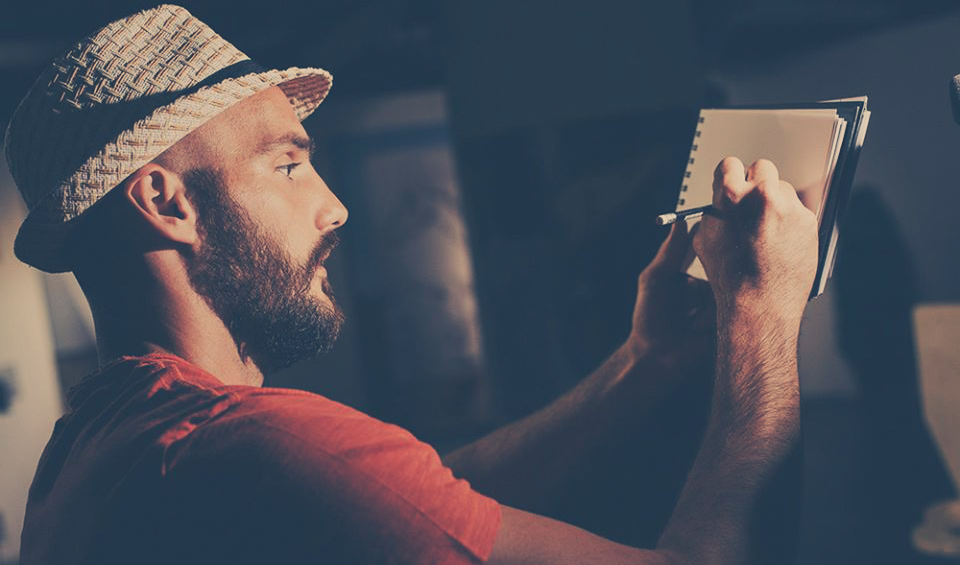
Artist Ben Heine in Studio
© 2013 Ben Heine
(Version française à ce lien | English version here)

INTRO: Ben Heine, auteur van het edito in de herfsteditie van Volkswagen Magazine, is een multidisciplinair artiest die speelt met technieken en kunstdragers. Hij combineert fotografie en tekenkunst, zoals in de reeks ‘Pencil Vs Camera’, maar werkt ook met het menselijk lichaam, bijvoorbeeld in ‘Flesh and Acrylic’. Een echte virtuoos met een potlood, maar evengoed bedreven in digitale technieken. Ben Heine stapt moeiteloos van de ene wereld in de andere, en het resultaat is altijd verrassend.

Peyo LissarragueJe studeerde journalistiek maar leerde jezelf tekenen. Maakt dat het moeilijker om erkenning te krijgen van collega’s?

Ben Heine: Autodidact zijn, heeft zo zijn voor- en nadelen. Door het feit dat ik geen kunst gestudeerd heb, zijn er ongetwijfeld al deuren voor me gesloten gebleven. En bepaalde collega’s kijken misschien wat op me neer. Anderzijds geniet ik enorm veel vrijheid. Ik kan nieuwe wegen bewandelen, ik ben niet gebonden aan academische dogma’s of een bepaald type onderwijs. Ik teken al sinds mijn prille jeugd, met veel passie. Ik heb hard gewerkt, ik geloof niet echt in talent. Tekenaar word je door te tekenen. Door vol te houden.

Je studeerde journalistiek en je bent tekenaar… je had bijvoorbeeld ook actualiteitscartoonist kunnen worden. Waarom koos je voor een andere weg?  

Ik heb veel respect en bewondering voor actualiteitstekenaars. Het is heel moeilijk om in enkele pennentrekken complexe situaties uit te beelden. Persoonlijk leg ik me liever toe op universele zaken, niet zozeer op dagdagelijkse details. Ik ben geen artiest die graag polemiek opwekt. Ik ben geen wereldverbeteraar, maar wil wel een boodschap van liefde en vriendschap uitdragen. Ik wil iedereen bereiken, mensen samenbrengen in plaats van te provoceren.

Je laat je inspireren door artiesten zoals Magritte. Is kunst een spel?

Ja, ik geloof in humor in kunst. In een ludieke, kinderlijke kijk. Wat natuurlijk niet impliceert dat ik geen humanistische waarden verdedig of diepgang zou missen.

Dat is ook wat je doet in je reeks ‘Pencil Vs Camera’. Je verbergt je niet achter optische illusies maar figureert zelf in je werk. Is dat een keuze?  

Mijn hand verschijnt inderdaad in die reeks. Ik hou een tekening vast die in de foto geïntegreerd wordt. Ik voelde van in het begin instinctief aan dat dat nodig was om een evenwichtig geheel te creëren. Het is natuurlijk geen mooie vrouwenhand, mijn hand breekt de harmonie een beetje. Op die manier wilde ik het maximum uit het concept halen. Ik wilde een bruuske overgang creëren tussen de verbeelding en de realiteit van de foto. Zo zie je heel duidelijk dat er geen Photoshop aan te pas gekomen is. Ik hou de tekening echt vast en kadreer mijn foto zo dat de lijnen overeenkomen. Dat vraagt heel wat fysieke inspanning!

Jouw idee werd al veelvuldig hergebruikt …

Vooral reclamebureaus lieten zich al inspireren door het concept. Ik vind dat goed, dat bewijst dat het een goed idee is! Voor mij is ‘Pencil Vs Camera’ een beperkte reeks. Als ik honderd beelden heb, stop ik ermee. Ik ben momenteel al met andere projecten bezig. Voor ‘Digital Circlism’ maak ik pointillistische portretten van beroemdheden maar dan met grote stippen en cirkels. ‘Flesh and Acrylic’ is een project rond het lichaam. Ik beschilder levende modellen van kop tot teen en integreer ze in een trompe-l’oeuil. En vorig jaar startte ik een muzikaal project op… een nieuw avontuur.

(*) Volkswagen Magazine is het officiële tijdschrift van Volkswagen met auto-advies, de laatste nieuwe modellen van Volkswagen, wedstrijden maar ook lifestyle, sport en festivals. Lees dit interview op Volkswagen Magazine website.

Ben Heine interview and printed cover in Volkswagen Magazine (October 2013)
Editorial, interview and cover in Volkswagen Magazine (2013)
Ben Heine art in Volkswagen Magazine - Belgium (October 2013)
Ben Heine art for an article in Volkswagen Magazine (2013)
.

"Incubator" is a new Art magazine based in South Korea. This interview was published in their issue 5 (Nov 2011).

Printed publication in
Stefanie Kimler's book
.

My photo titled "The Floating Bridge" has been published on the cover of Stefanie Kimler's new book "Funktion und Konstruktion von Parallelwelten" (ISBN 978-3-941274-33-4), released in Germany by Optimus.
Le Monde Diplomatique,
Polish Edition

.
.
This September, one of my paintings,
"Bushmen", is published in
the Polish edition of
"Le Monde Diplomatique"

.
--------------------------

Many thanks to Przemysław Wielgosz, editor in chief of "Le Monde Diplomatique", Polish edition. And warm thanks to Marcin Bondarowicz for his help and kindness !

--------------------------
.
Le Monde diplomatique

Le Monde diplomatique is a monthly publication offering analysis and opinion on politics, culture, and current affairs. Its articles are long, thoughtful, scholarly, and opinionated. First created mainly for a diplomatic audience, as its name implies, it has in recent years taken a critical view on the effects of supposed economic neoliberalism on the world and its population.

It thus includes articles both of a not so neutral, scholarly nature, and more opinionated pieces which qualify as advocacy journalism. However, its analysis and articles, because of their seriousness and accuracy, are still read by scholars and people across the entire political spectrum. Since the 1970s, its editorial line has become decidedly altermondialist and left-wing. Throughout the Cold War, it had a neutralist viewpoint, often critical of US foreign policy.

Today headed by Ignacio Ramonet, the original French edition has a circulation of about 350,000; sixteen editions in other languages bring the total to about 1.4 million readers worldwide. Jean-Marie Colombani, editor of the daily Le Monde, was attributed by Le Monde diplomatique's director general Bernard Cassen as saying: "Le Monde diplomatique is a journal of opinion; Le Monde is a journal of opinions."

1954 Formation and History

Le Monde diplomatique was founded in 1954 by Hubert Beuve-Méry, founder and director of Le Monde, the French newspaper of record. Subtitled the "organ of diplomatic circles and of large international organisations" 5,000 copies were distributed, comprising eight pages, dedicated to foreign policy and geopolitics.

Its first editor in chief, François Honti, made the newspaper into a scholarly reference journal. Honti attentively followed the birth of the Non-Aligned Movement, created out of the 1955 Bandung Conference, and the issues of the "Third World".

Claude Julien became the newspaper's second editor in January 1973. At that time, the circulation of Le Monde diplomatique had jumped from 5,000 to 50,000 copies, and would reach, with Micheline Paulet, 120,000 in less than twenty years. Without renouncing its "Third-worldism" position, it extended the treatment of its subjects, concentrating on international economic and monetary problems, strategic relations, the Middle-East conflict, etc. Le Monde diplomatique took an independent stance, criticizing the neoliberal ideology and policies of the 1980s, represented by Margaret Thatcher and Ronald Reagan.

After the November, 1989 Fall of the Berlin Wall and the 1990-1991 Gulf War, the newspaper made an important turn, and criticized the "American crusade". Ignacio Ramonet was elected director in January 1991. Le Monde diplomatique analyzed the post-Cold War world, paying specific attention to "ethnic" conflicts – the wars in former Yugoslavia, the 1994 Rwandan Genocide, the conflicts in the Caucasus, etc. – as well as to the new information technology.

After having published a famous editorial in January 1995 where Ramonet coined the term "pensée unique" ("single thought") to describe the supremacy of the neoliberal ideology, the newspaper supported the November-December 1995 general strike in France against Prime minister Alain Juppé's (RPR) plan to cut pensions. Three years later, after a proposal in a 1997 editorial by Ignacio Ramonet, Le Monde diplomatique took a founding role in the creation of ATTAC, an alter-globalization NGO, which was originally founded for advocacy of the Tobin tax, and which has since spread throughout the world.

It now supports a variety of left-wing causes. The newspaper also takes an important role in the organisation of the 2001 Porto Alegre World Social Forum. After the September 11, 2001 attacks and the Second Gulf War starting in 2003 under the George W. Bush administration, Le Monde diplomatique continues its position of criticizing the US policy of violent intervention in the Middle East and the neoconservative' project to reshape the so-called "Greater Middle East" region.

The Norwegian version of the July 2006 Le Monde diplomatique sparked interest when the editors ran, on their own initiative, a three page main story on the 9/11 attacks and summarized the various types of 9/11 conspiracy theories (which were not specifically endorsed by the newspaper, only recensed). The Voltaire Network, which has somehow changed position since the September 11 attacks and whose director, Thierry Meyssan, became a leading proponent of 9/11 conspiracy theory, explained that although the Norwegian version of Le Monde diplomatique had allowed it to translate and publish this article on its website, the mother-house, in France, categorically refused it this right, thus displaying an open debate between various national editions. In December 2006, the French version published an article by Alexander Cockburn, co-editor of CounterPunch, which strongly criticized the endorsement of conspiracy theories by the US left-wing, alleging that it was a sign of "theoretical emptiness." The Norwegian Le Monde diplomatique, did again however mark its difference from the mother edition by allowing David Ray Griffin's response to Cockburn to be published in their March 2007 issue.

Le Monde diplomatique SA

The monthly became a subsidiary company of Le Monde SA in 1996, which grants its complete editorial autonomy from Le Monde. André Fontaine, the director of Le Monde, had already signed a 1989 convention with Claude Julien which guaranteed the monthly's autonomy, but it gained complete statutory, economic and financial independence in 1996 with the creation of Le Monde diplomatique SA. With a donation from Günter Holzmann, a German antifascist exiled before World War II to Bolivia, the monthly's employees acquired approximately one-quarter of the capital, while Les Amis du Monde diplomatique, a 1901 Law association of readers, bought another quarter. Thus, since the end of 2000, the newspaper's employees and readers retain 49% of Le Monde diplomatique SA's capital, largely above the control stock necessary to control the direction and editorial line of the Monde diplo. The remaining 51% is owned by Le Monde.

Today's Distribution and Advertising

The original French edition has a circulation of about 350,000; sixteen editions in other languages bring the total to about 1.4 million readers worldwide.

Although Le Monde diplomatique publishes few in order to retain its editorial independence, it has sometimes been criticized for the quantity and nature of the published advertisements [citation needed]. In November and December 2003, two-page advertisements by IBM and a car manufacturer were placed. The issues of February and March 2004 contained advertisements by Microsoft in a 'social' atmosphere with a picture of children, which led to agitation from free software activists.

(Source : Wikipedia)
.